
Komodo Island: Meet the Dragons in the World’s Wildest Sanctuary
Komodo Island is the realm of the Komodo dragon, the largest living lizard. Ranger-guided treks, wildlife, safety and how to visit from Bali in 2026.
Updated October 2026 · by the Bali to Komodo concierge team
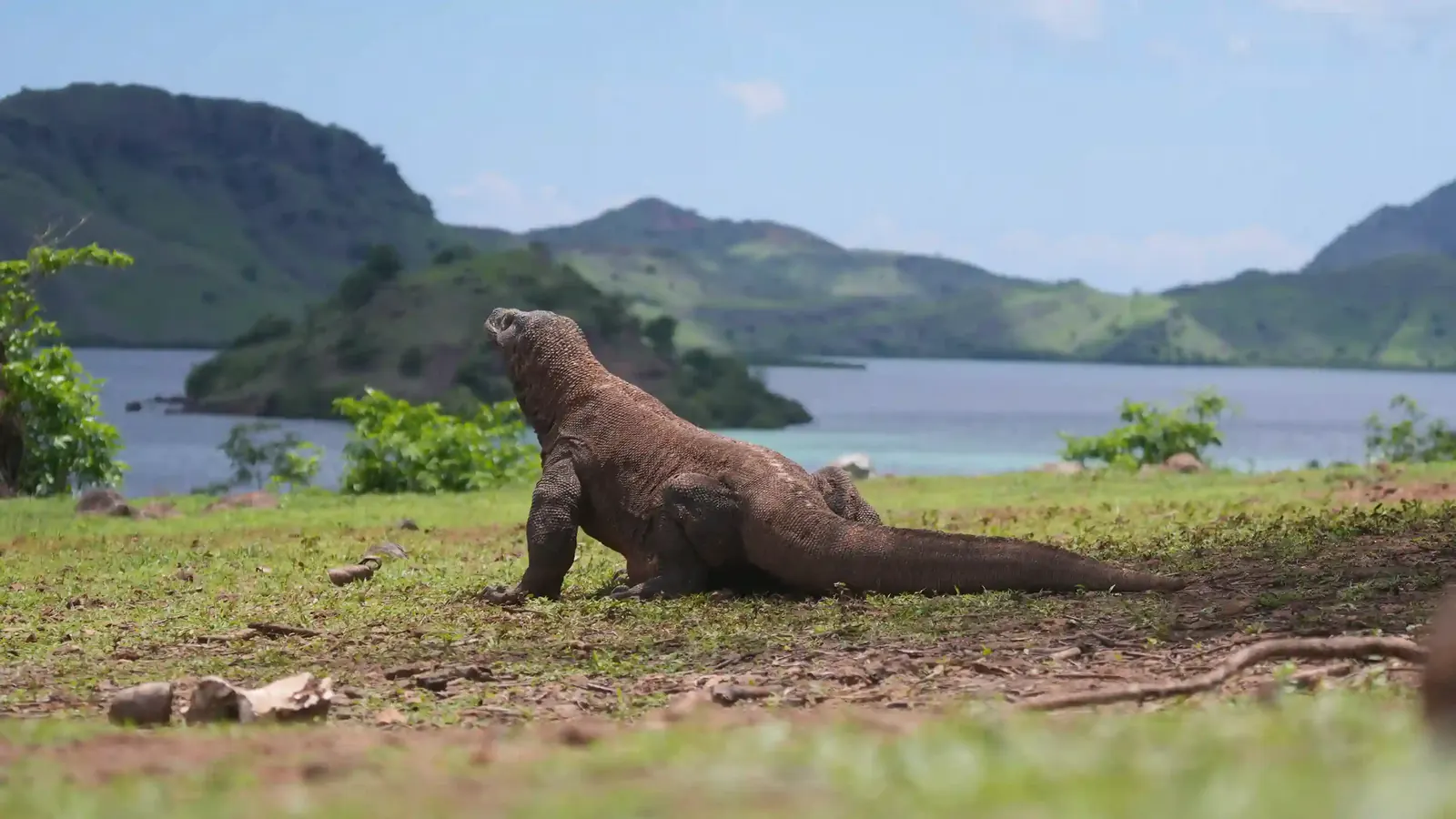
Komodo Island is a rugged volcanic island in eastern Indonesia and the principal home of the Komodo dragon, the largest living lizard on Earth. Part of Komodo National Park, a UNESCO World Heritage Site, it is reached by boat from Labuan Bajo and explored on ranger-guided treks through savannah, forest and shoreline where wild dragons roam freely.
For most travellers, Komodo Island sits at the very heart of any Komodo National Park journey. It is the place where the imagination of a lifetime, the prehistoric reptile glimpsed in documentaries, becomes something you stand a few metres from in the open air. The experience is quiet, deliberate and humbling. There are no fences, no enclosures and no theatre. There is only an ancient landscape, a small team of expert rangers, and an animal that has changed little in millions of years.
This guide covers the biology and behaviour of the dragons, what a ranger trek actually involves, the wildlife and scenery beyond the lizards, the safety protocols that keep every visit calm and well-managed, and the most graceful ways to arrange your visit, whether as a day excursion or as part of a private cruise. Komodo National Park was named the #2 Most Beautiful Place in the World by Time Out in 2026, and Komodo Island remains its defining destination.
Where Komodo Island Is, and Why It Matters
Komodo Island lies in the Lesser Sunda chain, within the strait that separates the islands of Flores and Sumbawa. It is one of three main islands inside Komodo National Park, alongside Rinca and Padar, and together they form a 1,733-square-kilometre marine and terrestrial reserve established in 1980 to protect the dragon and its habitat. The park was inscribed as a UNESCO World Heritage Site in 1991 in recognition of its singular ecology.
The island itself is dry and dramatic. Sun-bleached savannah ridges roll down to mangrove inlets and pale beaches, with lontar palms standing against the sky like sentinels. The climate is markedly more arid than tropical Bali, which is precisely what the dragons require. This is a landscape shaped by long dry seasons, and it carries an austere, cinematic beauty that rewards anyone who slows down to take it in.
Practically, almost every visit begins in Labuan Bajo, the harbour town on western Flores that serves as the gateway to the park. From there it is a scenic boat passage to the island’s ranger stations. Travellers arriving from Bali typically fly first to Labuan Bajo, a journey of roughly one hour and fifteen minutes, before continuing by sea. For a full breakdown of every route from Bali, see our guide on how to add Komodo to a Bali trip.
The Komodo Dragon: Biology and Behaviour
The Komodo dragon (Varanus komodoensis) is a species of monitor lizard found naturally only in this corner of Indonesia. It is the largest lizard alive today, and observing one in the wild is the central reason most people make the voyage.
Komodo dragon facts every visitor wants
A few essential komodo dragon facts put the encounter in perspective:
- Size and weight. Mature males commonly reach 2.5 to 3 metres in length and can weigh around 70 to 90 kilograms, occasionally more. They are genuinely large animals, longer than most people are tall.
- Longevity. In the wild a Komodo dragon may live around 30 years, growing slowly across decades.
- Diet. Adults are apex predators and scavengers, feeding on deer, wild boar, water buffalo and carrion. They can consume a remarkable proportion of their body weight in a single meal.
- Senses. A dragon’s sense of smell is extraordinary. Using its forked tongue and a specialised organ in the roof of the mouth, it can detect carrion from several kilometres away on the wind.
- The bite. Komodo dragons possess venom glands that secrete compounds which lower blood pressure and impede clotting in prey. Combined with serrated teeth, this makes them efficient hunters despite their unhurried appearance.
- Speed. Though they spend much of the day resting, dragons can move in short bursts of up to roughly 20 kilometres per hour, faster than a relaxed human jog. This is exactly why rangers set the pace and the distance.
How dragons behave in the wild
For all their fearsome reputation, the dragons you meet on Komodo Island are usually still, conserving energy in the heat. You will often find them basking near the ranger station, resting in shade, or moving slowly across a trail with a deliberate, swaying gait. Younger dragons are more arboreal and wary, spending time in trees to avoid larger adults. This calm is part of what makes a guided encounter so safe and so memorable: you are watching a wild predator going about an ordinary day.
Females lay eggs in nesting mounds, sometimes repurposing the mounds of megapode birds, and the young hatch after several months. The population across the park is carefully monitored, and the species is classified as Endangered, which is why every aspect of the visit is structured around conservation.
What a Ranger-Guided Trek Is Like
You cannot wander Komodo Island alone. Every visitor explores in the company of trained national park rangers, and this is the heart of the experience. The most popular landing on Komodo Island is Loh Liang, the main ranger post and trailhead on the island’s eastern side.
After landing and registering, you are assigned to a ranger who carries a long forked staff, the traditional tool used to maintain a respectful distance from any dragon that approaches. Treks are graded by length, typically short, medium and long loops ranging from around thirty minutes to a couple of hours, so you can choose a route that suits your fitness and the time of day.
The walk leads through dry forest and up onto savannah ridges with sweeping views over the strait. Along the way the ranger reads the landscape for you, pointing out dragons resting in the undergrowth, fresh tracks in the dust, nesting mounds, and the smaller creatures that share the habitat. The pace is unhurried and conversational. There is time to photograph, to ask questions, and simply to absorb the strangeness of standing in dragon country.
Mornings are the finest time to trek. The air is cooler, the light is soft and golden, and the dragons are often more active before the midday heat settles in. Our concierge can arrange early landings so you reach the trailhead ahead of the busier midday boats.
Komodo Island Wildlife Beyond the Dragons
The dragons are the headline, yet the komodo island wildlife roster is far richer than many travellers expect, and the surrounding waters are among the most biodiverse on the planet.
On land, the savannah supports Timor deer and wild boar, the dragons’ principal prey, along with long-tailed macaques, wild horses on neighbouring islands, and an array of birdlife. The orange-footed scrubfowl builds the very nesting mounds the dragons sometimes borrow. Sea eagles and other raptors patrol the ridgelines, and at dusk the skies near some islands fill with flying foxes.
Below the surface, the reefs fringing Komodo Island are spectacular. The nutrient-rich currents draw manta rays, reef sharks, turtles and vast schools of fish, and the coral gardens are vivid and healthy. Many visitors pair their island trek with snorkelling, and the park’s most famous beaches are close at hand. The celebrated Pink Beach lies a short boat ride away, its rose-tinted sand among the rarest shorelines on Earth, while the dramatic ridgeline of Padar Island offers one of Indonesia’s most photographed panoramas.
Safety on Komodo Island
A well-run visit to Komodo Island is calm and safe, and that is by design. Incidents are very rare and almost always involve ignoring guidance. A few principles keep every encounter relaxed:
- Stay with your ranger at all times. Never separate from the group or wander off-trail. The ranger chooses the route and the viewing distance for good reason.
- Keep your distance. Maintain a respectful gap from any dragon, and never attempt to touch, feed or provoke one. They are wild and faster than they look.
- Move calmly and quietly. Sudden movements and loud noise are unnecessary and unwelcome. A composed presence makes for better wildlife viewing and better photographs.
- Heed personal advice. Rangers may ask certain visitors, particularly those with open wounds, to take extra care, as a dragon’s acute sense of smell is drawn to blood. Mention any concerns at registration.
- Carry water and sun protection. The savannah offers little shade and the sun is strong. A hat, sunscreen and sturdy footwear make the trek far more comfortable.
Follow your ranger’s instructions and the experience is overwhelmingly one of wonder rather than apprehension. These professionals walk this ground every day and read the dragons’ moods with practised ease.
How to Visit Komodo Island in 2026
There are two principal ways to experience Komodo Island, and the right choice depends on how much time you have and the style of travel you prefer.
By day tour from Labuan Bajo. The most accessible option is a shared or private day excursion by speedboat from Labuan Bajo. A typical itinerary combines the dragon trek at Komodo or Rinca with snorkelling at Pink Beach and a hike on Padar, returning by evening. This suits travellers with limited time who still want to see the highlights in a single, well-paced day.
By multi-day cruise. For a deeper and more luxurious immersion, a liveaboard or private yacht charter lets you wake within the park, reach the islands before the day boats, and explore at a gentler rhythm. A cruise opens up remote dive sites, sunrise hikes and quiet anchorages that day trips cannot reach. Explore the options on our Komodo cruise collection or consider a tailor-made Bali and Komodo journey that weaves the island into a longer voyage.
A note on planning for 2026: a daily visitor quota of 1,000 people across the park took effect from April 2026, and conservation fees apply on entry. Because the most desirable morning slots and the finest cruise cabins are limited and book early, we strongly recommend arranging your visit well in advance. Our concierge handles permits, ranger fees and logistics so your only task is to enjoy the day.
To plan your encounter with the dragons, speak with a Komodo specialist on WhatsApp at +6281139414563 or email [email protected]. We will tailor the timing, the route and the vessel to you.
Frequently Asked Questions
Where is Komodo Island and how do I get there?
Komodo Island lies in eastern Indonesia, within Komodo National Park between Flores and Sumbawa. Visitors reach it by boat from Labuan Bajo on Flores. Travellers from Bali usually fly to Labuan Bajo first, around one hour fifteen minutes, then continue to the island by speedboat or cruise.
Can you really see Komodo dragons in the wild?
Yes. Komodo Island is one of the few places on Earth where you can see Komodo dragons living freely in their natural habitat. On a ranger-guided trek you typically observe several dragons resting or moving along the trails, from a safe and respectful distance set by your guide.
Is it safe to visit Komodo Island?
It is safe when you follow the rules. Every visit is led by trained national park rangers who set the route and viewing distance and carry forked staffs for protection. Incidents are very rare and almost always involve ignoring guidance. Stay with your group, keep your distance and remain calm.
How big is a Komodo dragon?
Adult Komodo dragons are the largest lizards alive today. Mature males commonly reach 2.5 to 3 metres long and weigh around 70 to 90 kilograms. They can sprint in short bursts of up to roughly 20 kilometres per hour, which is why rangers always set the pace on every trek.
What is the best time to visit Komodo Island?
The dry season from April to December offers the most reliable conditions, with calm seas and clear skies. Early morning is ideal for trekking, as the air is cooler and dragons are often more active before midday. A 2026 daily quota of 1,000 visitors makes advance booking advisable for the best slots.
Do I need a permit to see the Komodo dragons?
Yes. Entry to Komodo National Park requires conservation and ranger fees, and a daily visitor quota of 1,000 people applies from April 2026. Permits are arranged through licensed operators. Our concierge handles all permits, fees and logistics so your visit is seamless and fully compliant.
Continue planning