Destinations
Komodo Island
10 min read Updated Oct 2026
Meet the Dragons in the World's Wildest Sanctuary

Komodo National Park — UNESCO World Heritage site, Time Out's #2 Most Beautiful Place 2026, home to the Komodo dragon.
Updated October 2026 · by the Bali to Komodo concierge team
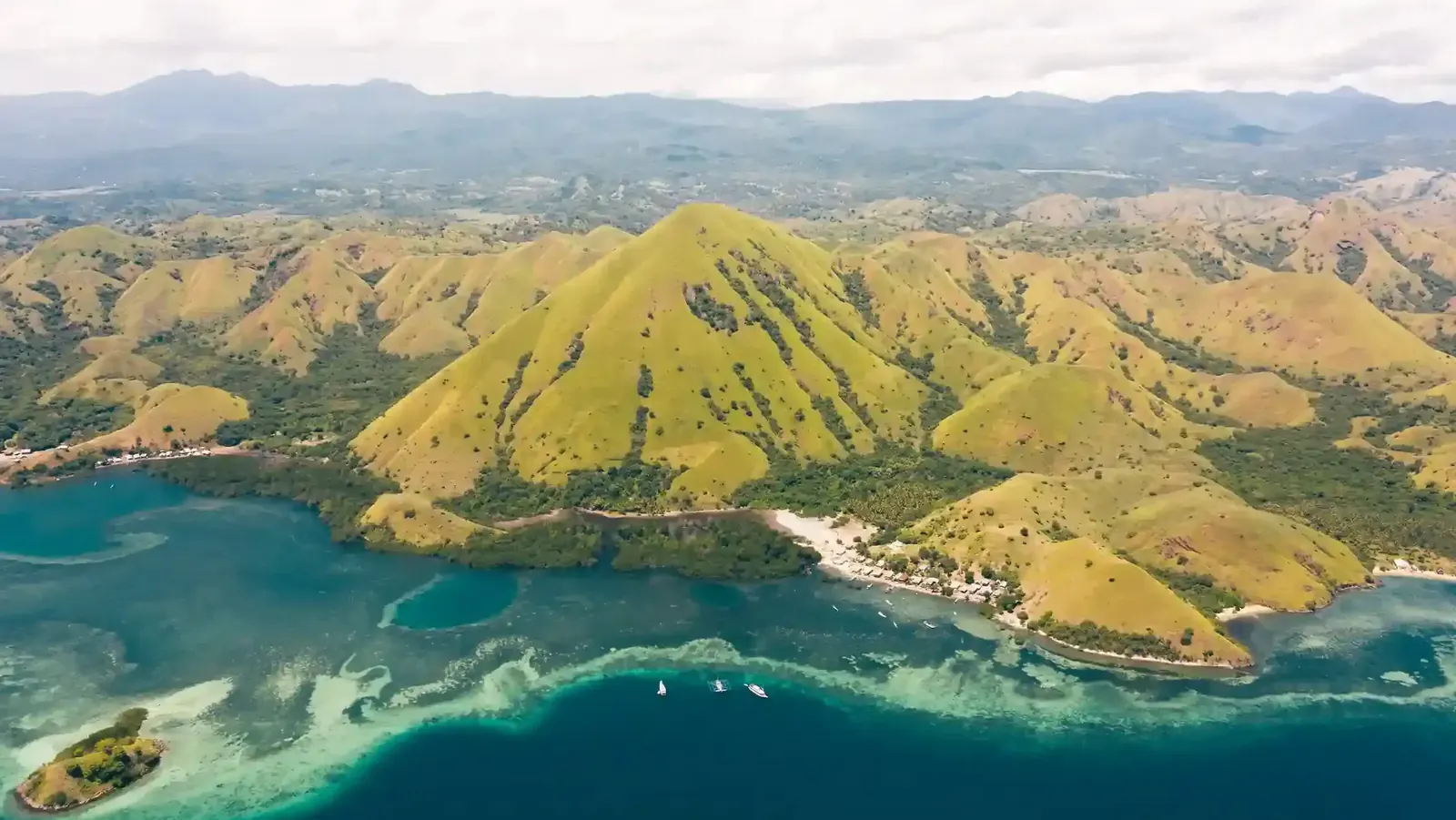
Komodo National Park is a UNESCO World Heritage Site in eastern Indonesia, named the #2 Most Beautiful Place in the World by Time Out in 2026 and home to the last wild Komodo dragons. Spanning three main islands and dozens of smaller ones, it shelters six celebrated sites — Komodo Island, Padar Island, Pink Beach, Manta Point, Rinca Island and Kelor Island — reached from the gateway town of Labuan Bajo, roughly a seventy-five-minute flight from Bali.
For most travellers, the park arrives as a revelation. You come to Indonesia for Bali, and somewhere between the rice terraces and the first sunset you hear about a place a short flight east where prehistoric reptiles patrol pink-sand shores and manta rays glide beneath a savanna horizon. That place is Komodo National Park, and this guide is the considered, on-the-ground introduction our specialists wish every guest had before they arrived. We are an Indonesian operator with our own fleet, ranger relationships, and a concierge desk that answers around the clock — so what follows is not borrowed from a brochure. It is the park as we know it, island by island.
Komodo National Park was established in 1980 to protect the world’s largest living lizard, the Komodo dragon, and was inscribed as a UNESCO World Heritage Site in 1991 in recognition of both its terrestrial and marine biodiversity. It covers an area of land and sea where the Australian and Asian biogeographic worlds meet, producing a landscape unlike anywhere else in the archipelago: parched, golden-hilled islands rising from some of the richest coral seas on the planet.
The park’s three principal islands are Komodo, Rinca and Padar, ringed by a constellation of smaller islets, reefs and dive sites. Above the waterline you find dry savanna, lontar palms and the dragons themselves; below it, more than a thousand species of fish, several hundred coral species, manta rays, turtles, reef sharks and the occasional dugong. It is this rare pairing — apex terrestrial predator above, teeming reef below — that earned the park its global standing and, in 2026, its place near the very top of Time Out’s list of the most beautiful places on Earth.
Understanding the park’s geography matters because it shapes how you visit. The sites are scattered across open water and there are no roads between them; the park is explored almost entirely by boat. Most guests base themselves in Labuan Bajo, the harbour town on the western tip of Flores that serves as the park’s only practical gateway, and travel out by day-boat or by multi-day cruise. We explain both routes in full below, and you can compare every option on our transport pillar and our cruise collection.
Every Komodo voyage begins in Labuan Bajo. Once a quiet fishing settlement, it is now a small, characterful port town with an airport (Komodo Airport receives direct flights from Bali in around an hour and a quarter), a deepwater harbour lined with phinisi sailing vessels, and a hilltop strip of cafés and viewpoints that catch one of the finest sunsets in Indonesia. It is the place you sleep before and after the park, and the point from which every boat departs.
What to do in Labuan Bajo, beyond using it as a launchpad, rewards a slow afternoon. Climb to Bukit Sylvia or the Paradise Bar terraces for the golden-hour panorama over the bay; browse the evening market for grilled fish; visit Batu Cermin, the “mirror cave” just outside town where shafts of light reveal fossilised coral in the limestone. Many of our guests arrive a night early simply to acclimatise, dine well, and meet their crew before casting off.
Labuan Bajo is also where the practicalities are arranged — park permits, ranger assignments, and the rhythm of your itinerary. Because we are based in Indonesia with a permanent presence here, our concierge can manage the moving parts on your behalf: the meet-and-greet at Komodo Airport, the transfer to your vessel, and the choreography of tides and quotas that determines which sites you see on which day. If you are still deciding how to reach the town in the first place, our Bali-to-Komodo planning hub lays out flights, fast boats and private charters side by side.
The park is best understood as a sequence of distinct experiences, each on its own island, each with its own character. Below is a teaser of all six celebrated sites; each links to a dedicated guide where we go far deeper into timing, access and what to expect.
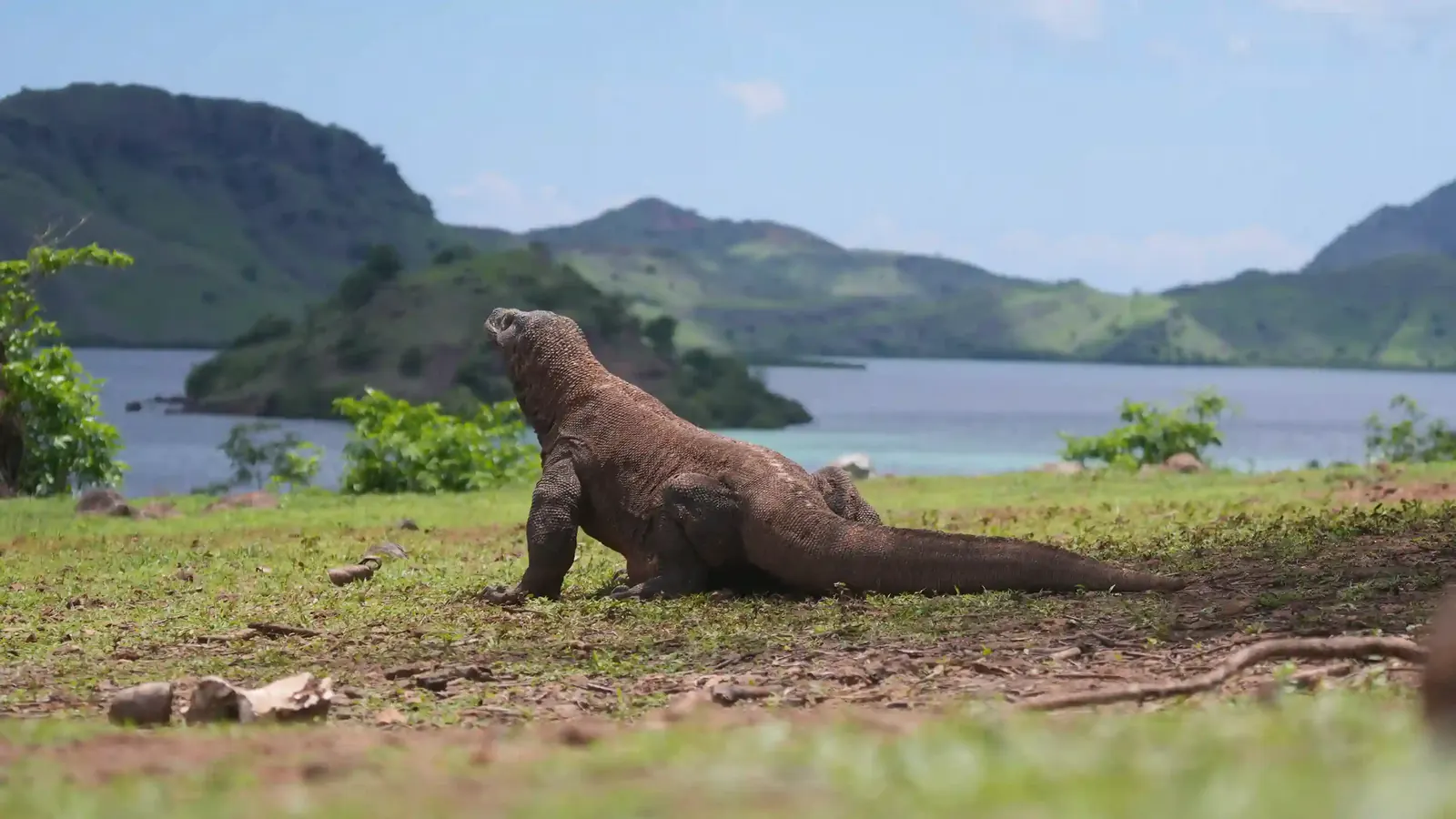
Komodo Island is the park’s namesake and its headline encounter: the place where you walk, under ranger escort, through dry forest and savanna in search of the Komodo dragon in its natural habitat. These animals reach three metres in length and are the heaviest lizards on Earth, descendants of a lineage that has changed little in millions of years. Seeing one at close range — tongue testing the air, claws raking the dust — is the kind of moment that recalibrates your sense of the wild.
The island is more than a dragon enclosure. Marked trails of varying length climb to ridgelines with sweeping island views, and the surrounding waters include some of the park’s finest snorkelling. Visits are always ranger-guided, both for your safety and the animals’ protection, and our guests travel with experienced local guides who read dragon behaviour the way a sommelier reads a vintage.
We have written a full account of the island, its trails, the best months to visit and the etiquette of a dragon encounter on the Komodo Island guide. It is the single page to read before you go.
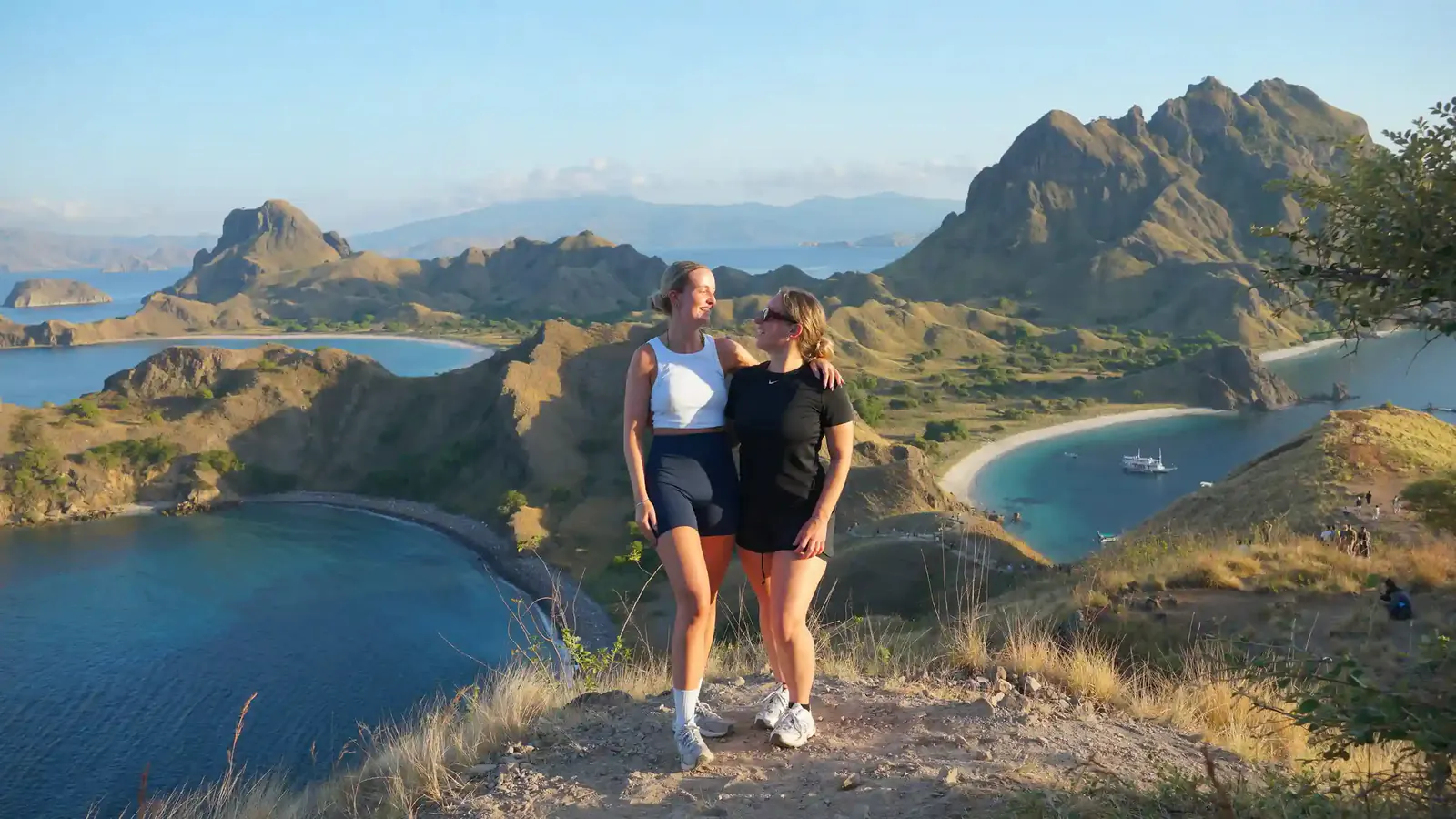
If you have seen one image of Komodo National Park, it was almost certainly taken from Padar Island. The short, steep climb from the jetty to Padar’s summit ridge opens onto the most photographed panorama in Indonesia: three crescent bays — one with pale sand, one golden, one dark — fanning out around volcanic ridgelines that fall sheer into the sea. At sunrise the light moves across the bays in slow gradients of rose and amber, and the viewpoint is, quite simply, breathtaking.
The hike is manageable for most reasonably fit travellers — a series of stepped switchbacks taking thirty to forty-five minutes — but it is best attempted early, before the heat and the crowds. Cruises that overnight in the park have the great advantage here: they reach the trailhead at first light, when day-boats from Labuan Bajo are still an hour or two away.
For the full route, the best departure time, and what to carry up, see the dedicated Padar Island guide.
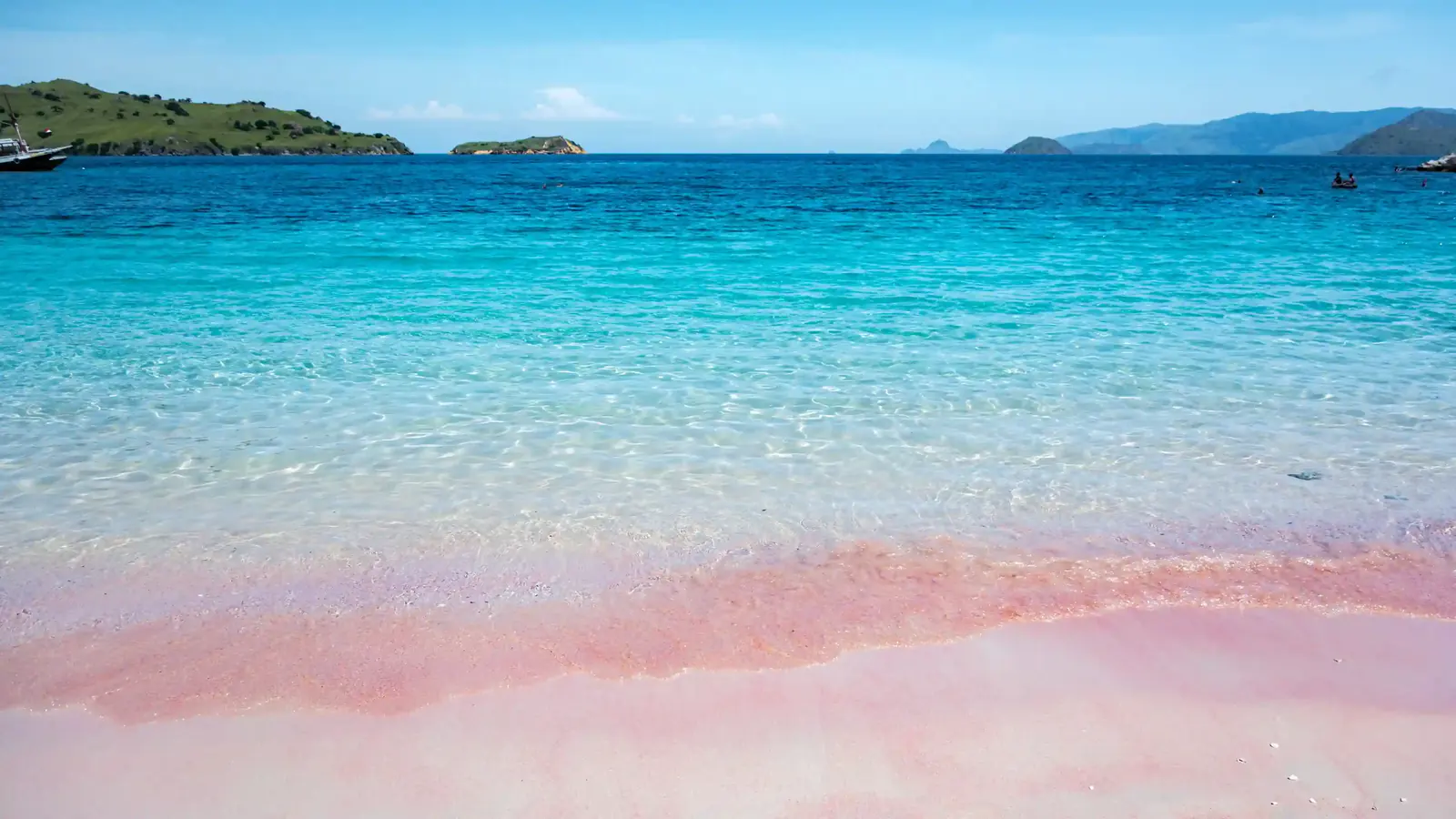
Pink Beach, known locally as Pantai Merah, is one of only a handful of pink-sand beaches in the world. Its blush colour comes from microscopic fragments of red coral mixed through the white sand, intensifying to a soft rose where the waves wash the shoreline. The effect is most vivid in bright midday light and against the turquoise shallows just offshore.
The beach is as rewarding below the waterline as above it. The reef here drops away close to shore, alive with coral gardens, reef fish and frequent turtle sightings, making it one of the park’s most accessible and beautiful snorkelling stops. It pairs naturally with a morning dragon walk or a Padar sunrise, and most itineraries fold it in as a mid-voyage interlude.
Our complete account — when the colour shows best, where to enter the water, and how to combine it with neighbouring sites — is on the Pink Beach guide.
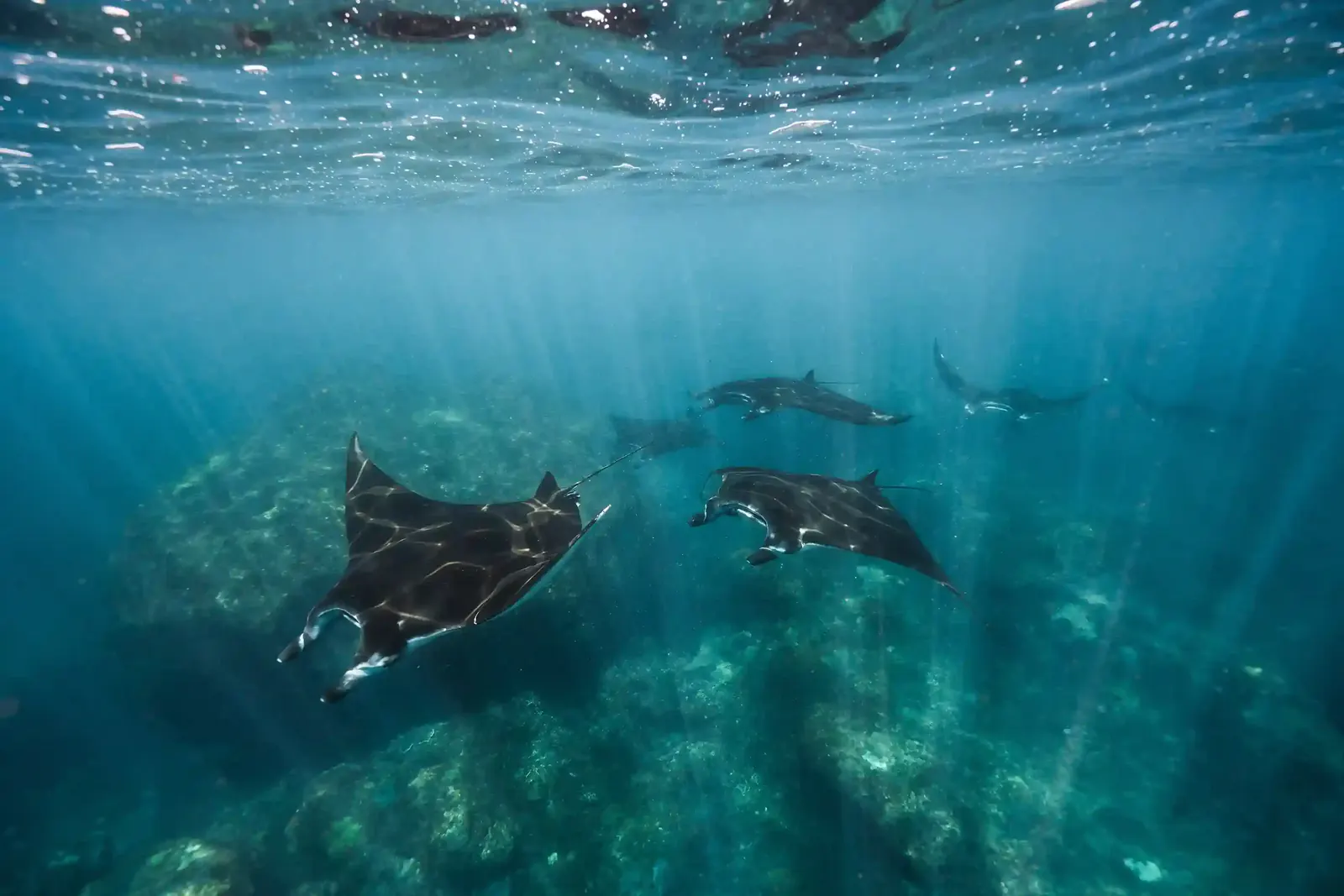
Manta Point is the park’s premier marine encounter: a channel where reef manta rays, with wingspans reaching several metres, gather to feed and to be cleaned by attendant reef fish. Drifting alongside one of these animals as it banks through the current, utterly unbothered by your presence, is among the most serene experiences the park offers. Mantas are present year-round, with the richest sightings when plankton blooms thicken the water.
This is a snorkelling and diving site rather than an island to land on, and conditions reward good timing and a knowledgeable crew who understand the tides and the rays’ feeding patterns. Currents can run strong, so it is a site best visited with operators who know it well — which is precisely why our captains build the day around the right window.
Everything you need — best season, what to expect in the water, and how to behave around mantas — is on the Manta Point guide.
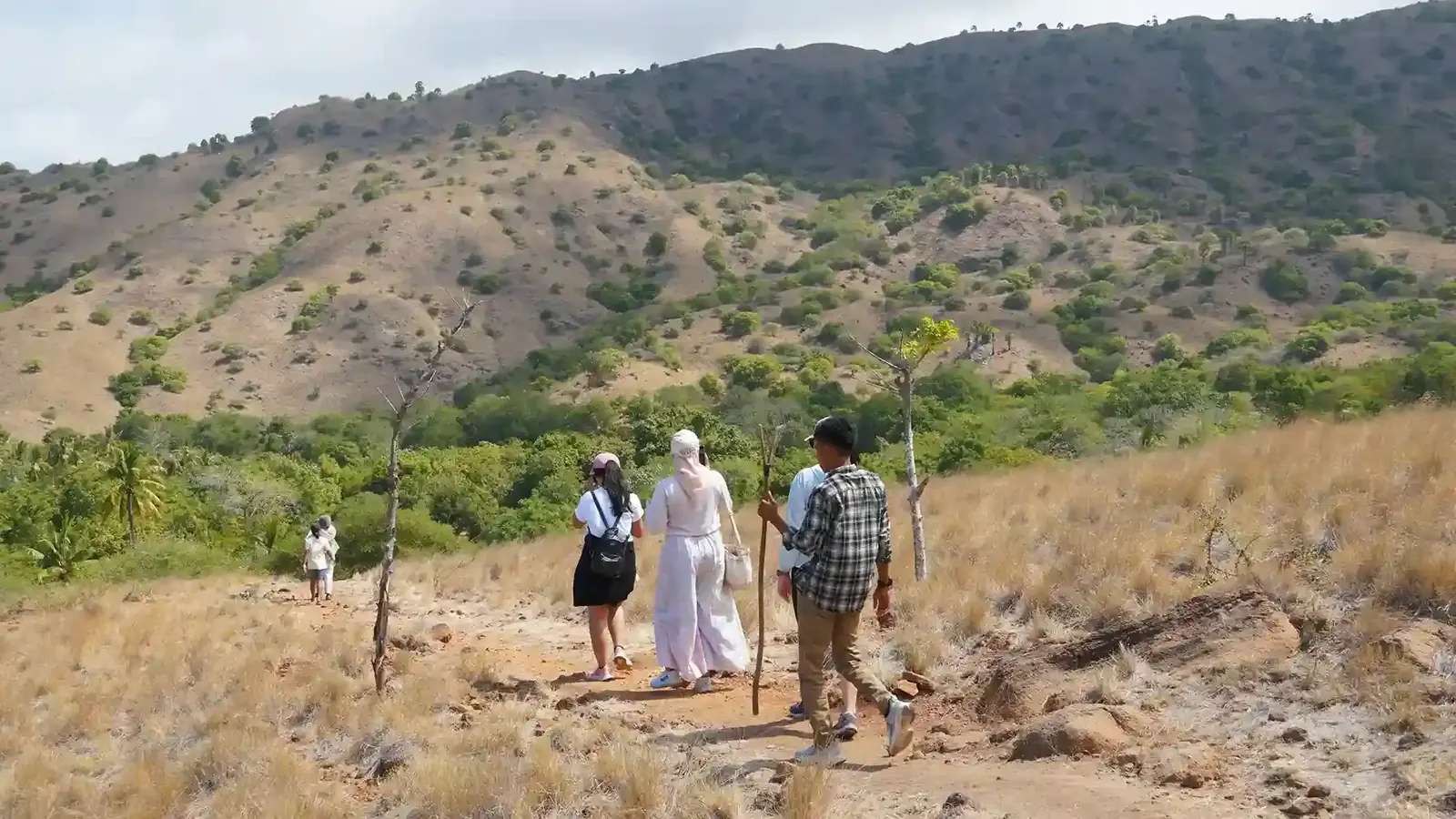
Rinca Island offers the park’s other great dragon experience, and for many guests it is the more atmospheric of the two. The terrain is rugged and open, the trails wind through mangrove and savanna, and dragons are frequently seen near the ranger station and along the paths. Because Rinca sits closer to Labuan Bajo than Komodo Island, it is the more practical choice for shorter itineraries, and its raw, frontier feel appeals to travellers seeking something less trodden.
Beyond the dragons, Rinca supports wild water buffalo, Timor deer, long-tailed macaques and an exceptional cast of birdlife, from sea eagles to the orange-footed scrubfowl. Treks are ranger-guided as standard, with short, medium and long routes to suit different appetites for walking.
Read the Rinca Island guide for trail options, the best time of day to walk, and how Rinca compares with Komodo Island.
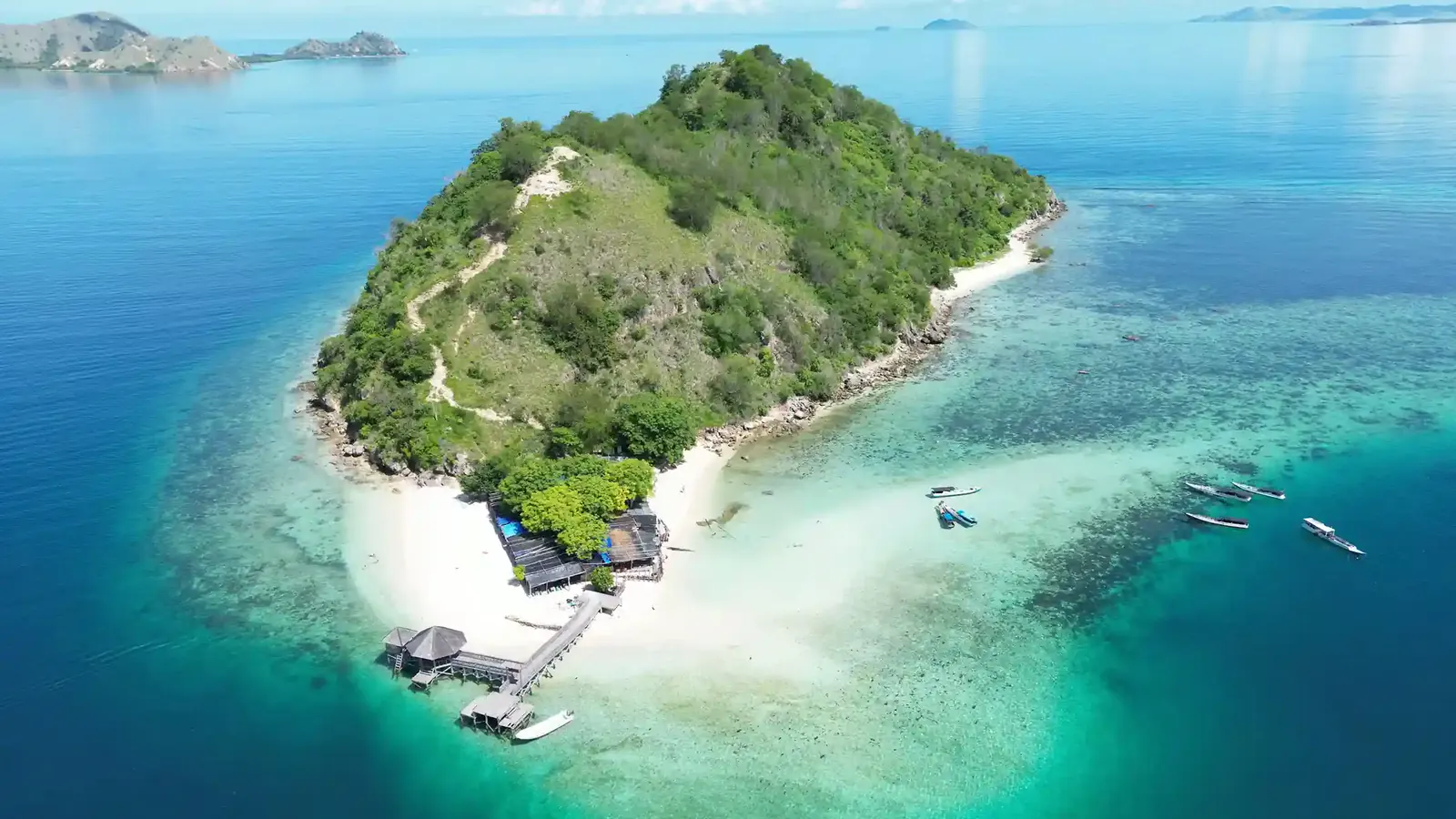
Kelor Island is the park’s graceful overture: a small, hill-crowned islet close to Labuan Bajo, often the first stop on a day-boat itinerary. A short, sharp climb to its grassy summit delivers a postcard view over scattered islands and anchored phinisi, while the calm, clear bay below is ideal for an easy swim or a first snorkel of the trip.
Its proximity and its forgiving climb make Kelor a favourite for families, for those easing into the park’s rhythm, and for anyone wanting a viewpoint without the full Padar ascent. It is modest in scale but quietly lovely, and it sets the tone for the days that follow.
The Kelor Island guide covers the climb, the swimming, and how it fits into a wider Komodo voyage.
The park rewards a deliberate mix of land and sea. Among the Komodo National Park activities our guests value most:
The right sequence depends on how many days you have, the season, and whether you travel by day-boat or by cruise. The best months are the dry season from April to December; manta encounters run year-round, peaking from December to February when plankton is abundant. We set out the full seasonal picture on our best-time-to-visit guide.
There are two ways to experience Komodo National Park, and the choice shapes everything about your time there.
By boat private speedboat day-tour from Labuan Bajo. A day-boat leaves the harbour in the morning, threads a chosen sequence of sites — typically a dragon island, Padar or Kelor, Pink Beach and a snorkel stop — and returns by evening. It is the most accessible way in, well suited to travellers with limited time or a first taste in mind, with indicative pricing from around US$800 per boat depending on the vessel and the route. The trade-off is the schedule: day-boats arrive at the marquee sites in the middle of the day, when light is harsh and other boats have gathered.
By multi-day cruise or liveaboard. A cruise turns the park itself into your hotel. You sleep aboard a phinisi or yacht, wake at anchor inside the park, and reach Padar or the dragon trails at dawn, hours before the day-boats. You cover sites that day-trippers cannot reach, dine under the stars, and move at the unhurried pace the place deserves. Indicative pricing runs from around US$300 to US$850 and beyond per person for shared trip, scaling from a shared cabin to a fully private vessel. For the considered traveller, this is the way the park is meant to be seen — and it is the heart of what we do. Explore the full range on our cruise collection.
If you are travelling from Bali, the practical route is to fly into Labuan Bajo and join your boat there; there is no direct passenger ferry from Bali to Komodo, and the only sea route is a multi-day private sail. We map every option — flight, fast boat, ferry, private charter and day-trip — on the Bali-to-Komodo transport hub, and our trip packages combine the park with a tailored Bali stay for those building a single, seamless journey.
Komodo National Park is a living ecosystem under careful protection, and responsible travel is not an add-on here — it is the condition of entry. The dragons are endangered, the reefs are fragile, and the park’s standing depends on visitors treading lightly.
The most significant recent change is the introduction of a visitor quota of 1,000 people per day from April 2026, designed to ease pressure on the most popular sites and safeguard the wildlife. In practice this means the park can no longer absorb unlimited arrivals on demand, and the most sought-after dates — particularly in the dry-season peak — call for advance arrangement. Guests who book early, through an operator who manages permits and quota allocation directly, are far better placed than those who arrive hoping to secure a slot on the day.
Travelling responsibly in the park is straightforward: keep to marked trails and ranger instructions on the dragon islands, never feed or touch wildlife, take nothing from the reefs or the pink sand, and use reef-safe sun protection. As an Indonesian operator with long-standing relationships in Labuan Bajo, we handle permits and quota compliance as a matter of course, and our trips are structured around the park’s carrying capacity rather than against it.
Komodo National Park is remote, weather-shaped and quota-governed, and the difference between a good visit and an extraordinary one lies almost entirely in who arranges it. We are PT. Komodo Bahari Nusantara, a Komodo Luxury company within the Juara Holding Group, with our own vessels, our own crew, and a permanent base in Indonesia.
What that means for you: local operator knowledge that reads tides, light and dragon behaviour to put you in the right place at the right hour; ranger-guided treks led by guides who know these animals intimately; and a concierge desk reachable 24/7 to shape your itinerary, manage permits and quota, and answer the questions that arise once you are committed to the journey. We do not sell a seat; we arrange a voyage.
To begin, message our concierge on WhatsApp at +6281139414563 or write to [email protected]. Tell us how many days you have and what you most want to see, and we will compose the rest. You may also start from the homepage for an overview of every way to reach and explore the park.
Where is Komodo National Park?
Komodo National Park lies in the Lesser Sunda Islands of eastern Indonesia, between the islands of Sumbawa and Flores. It is reached through the gateway town of Labuan Bajo on western Flores, which receives direct flights from Bali in roughly seventy-five minutes. From Labuan Bajo’s harbour, the park’s islands are explored by boat.
What animals live in Komodo National Park?
The park is famous for the Komodo dragon, the world’s largest lizard, alongside wild water buffalo, Timor deer, macaques, sea eagles and orange-footed scrubfowl on land. Its waters shelter more than a thousand fish species, hundreds of corals, manta rays, sea turtles, reef sharks and occasionally dugongs, making it one of Earth’s richest combined ecosystems.
Can you see Komodo dragons in the wild?
Yes. Komodo dragons are seen in their natural habitat on Komodo Island and Rinca Island, always under the escort of trained park rangers. Sightings are reliable rather than guaranteed, as the animals roam freely, but experienced local guides know where dragons gather and when they are most active, giving guests a strong chance of a close encounter.
Is Komodo National Park worth visiting?
Komodo National Park was named the #2 Most Beautiful Place in the World by Time Out in 2026 and is a UNESCO World Heritage Site. The pairing of prehistoric dragons, the Padar viewpoint, rose-sand beaches and world-class marine life is found nowhere else. For travellers already in or planning Bali, a short flight east opens one of the most extraordinary destinations in Indonesia.
How do you get to Komodo National Park?
The practical route is to fly into Labuan Bajo’s Komodo Airport — around seventy-five minutes direct from Bali — and join a boat from the harbour. The park is then explored by day-tour or by multi-day cruise. There is no direct passenger ferry from Bali to Komodo; the only sea route is a multi-day private sail arranged in advance.
Is it safe to see Komodo dragons?
Yes, provided you visit with park rangers, as all guests do. Komodo dragons are powerful wild predators and must be respected, so visitors stay on marked trails, keep a safe distance, and follow ranger guidance at all times. With experienced local guides reading the animals’ behaviour, dragon encounters are conducted safely and have an excellent record across the park.
When is the best time to visit Komodo National Park?
The dry season from April to December offers the most reliable conditions for hiking, sailing and snorkelling, with calm seas and clear skies. Manta rays are present year-round, with the densest gatherings from December to February when plankton blooms. We set out the full month-by-month picture on our best-time-to-visit guide.
Do I need to book in advance because of the 2026 quota?
From April 2026, Komodo National Park admits a maximum of 1,000 visitors per day. Popular dates, especially in the dry-season peak, can reach capacity, so advance booking through an operator who manages permits and quota is strongly advised. Booking early secures your access and lets our concierge arrange the ideal sequence of sites for your dates.
Explore this collection
06 guides
Destinations
10 min read Updated Oct 2026
Meet the Dragons in the World's Wildest Sanctuary
Destinations
10 min read Updated Oct 2026
The Three-Bay Viewpoint & Sunrise Hike Guide (2026)
Destinations
8 min read Updated Oct 2026
The Rose-Coloured Shore of Komodo National Park
Destinations
9 min read Updated Oct 2026
Snorkelling & Diving with Manta Rays (2026)
Destinations
9 min read Updated Oct 2026
The Wilder Komodo Dragon Trek (2026 Guide)
Destinations
8 min read Updated Oct 2026
The Gentle First Stop (2026 Guide)
Continue planning
Your voyage begins with a message
Tell us when you are travelling and what you dream of seeing. Your Komodo specialist will take care of the rest.