
Manta Point Komodo: Snorkelling & Diving with Manta Rays (2026)
Manta Point Komodo is the park's premier manta-ray encounter. The 2026 guide to snorkelling and diving with giant mantas — seasons, what to expect, safety and…
Updated October 2026 · by the Bali to Komodo concierge team
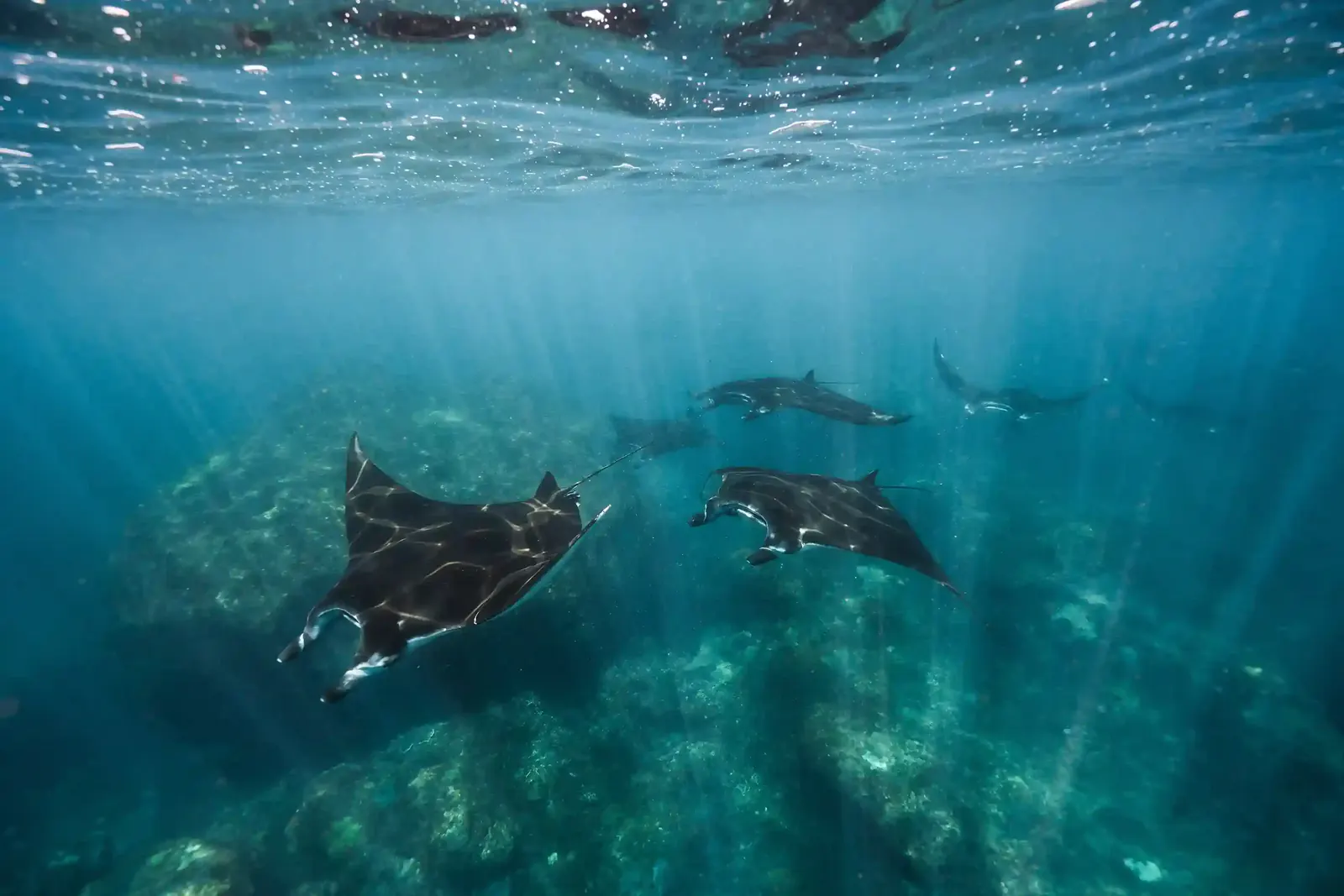
Manta Point is a manta-ray cleaning and feeding station in Komodo National Park, where reef mantas with wingspans of several metres glide through the current. Both snorkellers and divers encounter them, and the rays are present year-round, with the densest sightings from December to February during plankton blooms. The site is reached by boat from Labuan Bajo.
For many guests it is the most serene experience the park offers. To drift alongside an animal that wide, as it banks unbothered through the channel, recalibrates your sense of scale and stillness in a way the dragons, for all their drama, do not. This guide is the considered briefing our crews give before every visit — the seasons, what to expect in the water, how to behave around the rays, and how to reach the site from Bali. We are an Indonesian operator with our own vessels and captains who read this channel’s tides week after week, so what follows is the encounter as we know it. Manta Point sits within our wider Komodo National Park destinations guide, where every site is mapped in full.
What Manta Point Actually Is
Manta Point is not an island to land on but a stretch of water — a shallow channel and reef where conditions draw reef manta rays in reliable numbers. The park has more than one such spot, and “Manta Point” is the name commonly given to the most visited of them, a site where the seabed and current combine to create both a feeding ground and a cleaning station.
The cleaning station is the key to the encounter. Mantas hover above particular coral outcrops while small wrasse and other reef fish pick parasites from their skin and gills, a patient grooming ritual that holds the rays in place and allows snorkellers and divers a sustained, close view. Nearby, when plankton is abundant, the same mantas feed by swimming slow, open-mouthed loops through the water column, sometimes several at once in a loose, wheeling chain. Reef mantas here commonly span three to four metres across the wings, occasionally more, and they are entirely harmless — filter-feeders with no sting and no interest in people, beyond a mild curiosity that sometimes brings them remarkably close.
It is a marine site, then, visited by getting into the water, and it pairs naturally with the park’s other sea-and-shore stops. Most itineraries fold Manta Point in alongside a swim at Pink Beach, a dawn climb on Padar Island and a dragon walk on Komodo Island, the four together forming a full and varied voyage.
Snorkelling and Diving with Manta Rays
Manta Point rewards both the snorkeller and the diver, and the encounter is genuine either way.
For snorkellers, this is among the most accessible great wildlife experiences in Indonesia. Because mantas at the cleaning station and during surface feeding often hold near the top of the water column, you frequently watch them from the surface with mask and fins alone, no diving required. A capable swimmer in reasonable comfort with a snorkel will have a fine encounter, and our guides position guests so the rays pass close without being crowded.
For divers, Manta Point and the park’s wider manta sites offer the added dimension of depth — hovering near the cleaning outcrops as mantas circle overhead, eye to eye in open water. Komodo’s mantas are a highlight of any dive itinerary, and the park is among the world’s premier destinations for diving with them. Conditions suit a range of experience, though some manta sites carry current that rewards a confident diver and an attentive crew.
The decisive factor, for snorkeller and diver alike, is timing and seamanship. The rays follow the food and the tides, and a captain who knows the channel reads the right window — the state of the current, the time of day, the season — to put you in the water when the mantas are present and the conditions are kind. This is precisely the judgement our crews bring to the day, and the reason an experience here varies so much between operators.
When to Go: Manta Seasons in Komodo
The great virtue of Manta Point is that it does not close. Reef mantas are present year-round in Komodo National Park, so an encounter is possible in any month — a rare thing among the world’s manta destinations, many of which have a narrow window.
That said, there is a peak. The richest gatherings come from December to February, when seasonal plankton blooms thicken the water and the mantas congregate to feed, sometimes in numbers, looping open-mouthed through the current. These are the months of the highest counts and the most spectacular feeding behaviour. The trade-off is that this peak falls within the greener, wetter part of the year, when seas can be livelier and underwater visibility more variable.
The dry season from April to December brings calmer water and clearer visibility, ideal conditions for the encounter even if the very densest feeding aggregations belong to the high-plankton months. In truth there is no wrong time: the dry season offers clarity and comfort, the turn of the year offers abundance. We help guests weigh the two against the rest of their itinerary, and our best-time-to-visit guide sets out the full month-by-month picture for the park.
Safety and Manta Etiquette
Manta rays are gentle, but a respectful encounter depends on the guest as much as the guide, and a few principles protect both the animals and the experience.
Keep your distance and let them come to you. The guidance across the park, which our crews enforce, is to stay at least three metres from a manta and never to approach, chase or attempt to touch one. Mantas are curious and will often close the gap of their own accord; the encounter is finest when you hold still and let it unfold.
Never touch the rays. A manta’s skin carries a protective mucus layer, and human contact damages it, leaving the animal vulnerable to infection. Touching is forbidden and, beyond the harm, breaks the spell of an animal moving entirely on its own terms.
Stay clear of the cleaning stations and out of the way overhead. Crowding a cleaning outcrop drives the mantas off; floating directly above one can do the same. Our guides position guests to the side, where you see everything without disturbing the ritual.
Respect the current and stay with your guide. Some manta sites run strong tidal current, which is why the site is best visited with operators who know it well. Snorkellers stay within the group and follow the crew’s lead; divers manage buoyancy and trim to avoid contact with the reef. With an experienced captain reading the channel, the encounter is both safe and deeply calm.
How to Get to Manta Point from Bali
Manta Point is reached only by boat, and every boat departs from Labuan Bajo, the harbour town on western Flores that is the park’s gateway. There is no land access; the journey is by sea from the mainland.
From Bali, the practical route is to fly. A direct flight from Denpasar to Labuan Bajo takes around one hour and fifteen minutes, with several departures daily, landing at Komodo Airport a short transfer from the harbour. There is no passenger ferry from Bali to Komodo; the only sea route is a multi-day private sail arranged in advance.
From Labuan Bajo, you reach Manta Point in one of two ways. A day-boat leaves the harbour in the morning and includes a manta stop among its sequence of sites, returning by evening. A multi-day cruise ranges more freely across the park and can time the manta sites to the best tide and light, often with the water to itself — which is why we consider it the finer way to experience the encounter. We compare both, with indicative costs, on our destinations hub, and our tailor-made journeys fold Manta Point into a seamless Bali-and-Komodo itinerary. The full marine programme sits within our cruise collection.
To arrange your encounter — and to be in the water at the right tide rather than the wrong one — message our concierge on WhatsApp at +6281139414563 or write to [email protected]. Tell us your dates and your comfort in the water, and we will compose the rest. You may also begin from the homepage for an overview of every way to explore the park.
Frequently Asked Questions
Can you snorkel with manta rays at Manta Point in Komodo?
Yes. Manta Point is excellent for snorkelling, and a manta encounter requires no diving certification. Because the rays often hold near the surface at cleaning stations and while feeding, capable swimmers watch them with mask and fins from the surface. Guides position guests so the mantas pass close without being crowded, making this one of Indonesia’s most accessible great wildlife experiences.
What is the best time of year to see mantas at Manta Point?
Reef mantas are present year-round in Komodo, so an encounter is possible in any month. The densest gatherings come from December to February, when plankton blooms draw mantas to feed in numbers. The dry season from April to December offers calmer water and clearer visibility. There is no wrong time; our best-time-to-visit guide weighs the seasons in detail.
Are manta rays at Manta Point dangerous?
No. Manta rays are gentle filter-feeders with no sting and no interest in people beyond mild curiosity. They are entirely harmless to snorkellers and divers. The guidance, which our crews enforce, is to keep at least three metres away, never touch the rays, and let them approach on their own terms. Some sites carry current, so an experienced crew is important.
Is Manta Point better for diving or snorkelling?
Both are genuine. Snorkellers have superb encounters because mantas often hold near the surface, requiring no certification. Divers gain the added dimension of depth, hovering near the cleaning stations as mantas circle overhead, and Komodo ranks among the world’s premier manta-diving destinations. The right choice depends on your experience and comfort in the water, which our concierge helps assess when planning.
How do you get to Manta Point from Bali?
Fly from Denpasar to Labuan Bajo, around seventy-five minutes direct with several daily departures, then join a boat from the harbour, as Manta Point is reached only by sea. Day-boats include a manta stop, while multi-day cruises can time the site to the best tide and light. There is no direct passenger ferry from Bali to Komodo.
What should I expect when swimming with mantas?
Expect to drift quietly as reef mantas, commonly three to four metres across, glide through the channel to feed or be cleaned by reef fish. The encounter is calm and unhurried; the rays often pass close of their own accord. You stay with your guide, keep your distance, and avoid touching the animals. With the right tide and an experienced crew, it is among the park’s most memorable moments.
Continue planning