
Komodo Dragon Facts: Separating Myth from Reality
Komodo dragon facts that bust the myths: are they dangerous, is the venom deadly, how fast they run, the biggest lizard, and are there Komodo dragons in Bali.
May 8, 2026 · 6 min read
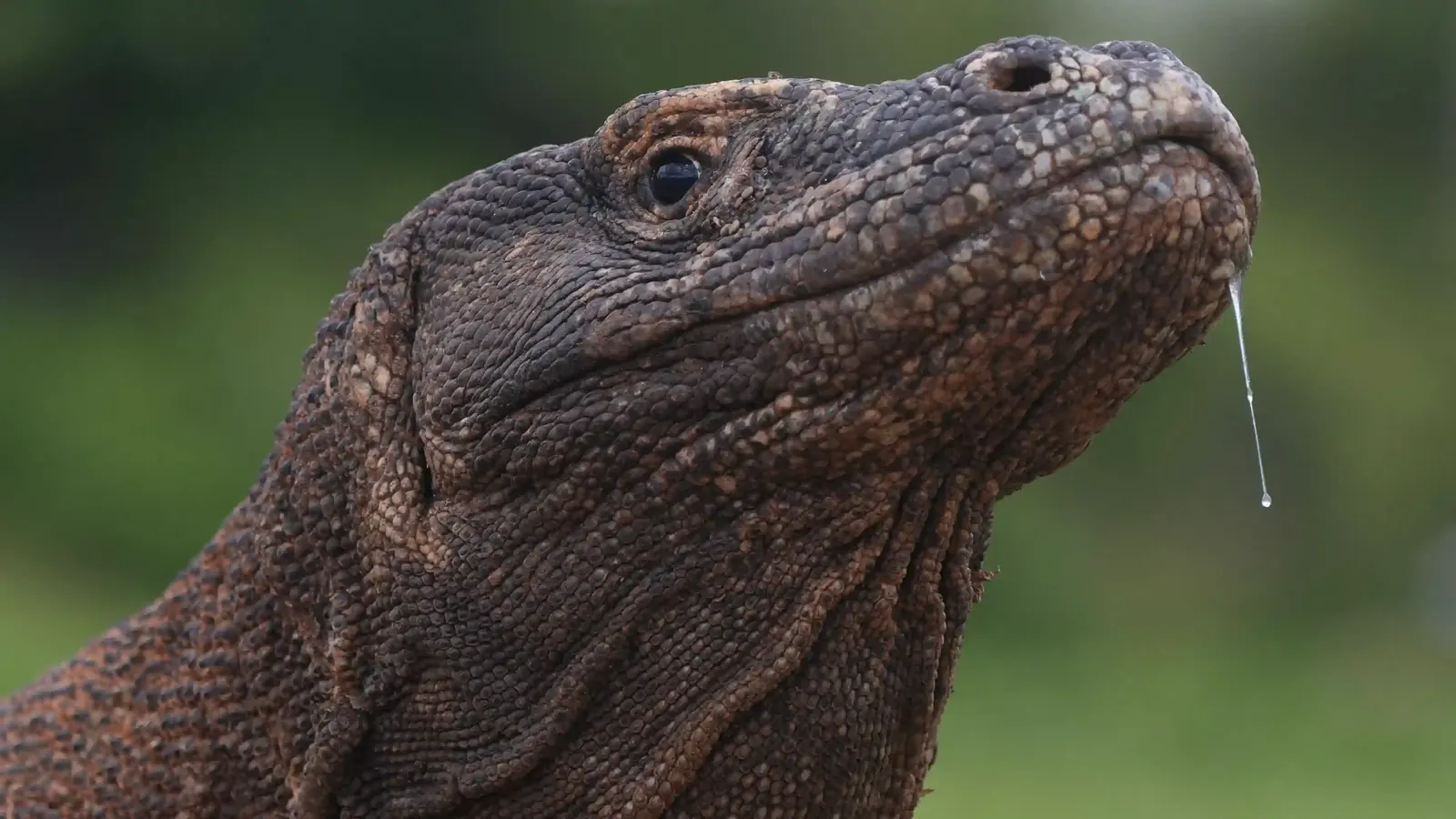
The Komodo dragon is the world’s largest living lizard, reaching three metres and up to 90 kilograms, and while it is a genuine predator, it poses very little danger to guided visitors. Park records note only 36 bites and five fatalities between 1974 and 2023, and almost all involved residents in close daily contact, not tourists. The facts are far calmer than the legend.
Few animals are wrapped in as much myth as the Komodo dragon. Documentaries lean on menace, films borrow its name for monsters, and travellers arrive half expecting a creature from prehistory. The reality, drawn from science and from half a century of managed tourism, is more remarkable and far less frightening. Here we answer the questions people genuinely ask, separating verified fact from the stories that have grown around this extraordinary reptile.
Are Komodo dragons actually dangerous?
Yes and no, and the distinction matters. A Komodo dragon is a wild apex predator, fully capable of taking large prey such as deer and water buffalo, so it commands respect. But it is also an ambush hunter that conserves energy and shows little interest in upright, moving humans. It does not stalk visitors, and it does not regard a person walking with a guide as a meal.
The safety record bears this out. Across roughly five decades of tourism, with the park now welcoming hundreds of thousands of guests each year, documented incidents remain rare and overwhelmingly involved people who live and work among the animals. Independent hiking is never permitted; every group walks with a licensed ranger who reads the dragons’ behaviour and keeps a safe distance. To explore where the dragons live and how a visit is structured, our Komodo Island destination guide sets out the trekking routes and ranger stations in detail.
Can a human survive a Komodo dragon bite?
Yes. With prompt, proper medical care, the great majority of bite victims recover. The danger from a bite is not instantaneous; it lies in blood loss and infection if untreated. The dragon’s saliva carries bacteria, and its venom glands secrete compounds that lower blood pressure and hinder clotting, which is why a serious bite needs swift attention.
This is precisely why the park’s rules exist. Rangers carry first-aid provisions, Labuan Bajo has medical facilities, and the guided structure means help is never improvised. The image of a bite as an automatic death sentence belongs to fiction, not to the documented experience of the park.
Is Komodo dragon venom deadly?
This is one of the most misunderstood facts. For decades it was believed that dragons killed through septic bacteria alone. Research published in 2009 confirmed that Komodo dragons do possess venom glands, secreting toxins that reduce blood pressure and impair blood clotting in prey.
The crucial point for visitors, however, is scale. The venom is calibrated to weaken large prey over time as the dragon tracks it, not to kill a human in seconds, as a venomous snake might. Combined with the rarity of bites and the availability of treatment, the venom is not the existential threat that headlines imply. It is part of what makes the animal a formidable hunter, not a reason for a guided guest to feel unsafe.
What is the biggest lizard in the world?
The Komodo dragon holds the title outright. Mature males commonly reach 2.5 to 3 metres in length and can weigh up to around 90 kilograms, dwarfing every other living lizard. This formidable size is a product of island living, where, in the absence of large mammalian predators, the dragon evolved to fill the role of the islands’ dominant hunter.
That evolutionary story is part of the species’ fascination, and seeing an animal of such scale in the wild, moving with unexpected grace along a dry hillside, is among the most memorable encounters in nature. The dragons share their habitat across several islands, including Komodo and Rinca; our Rinca Island guide describes what a trek on the quieter of the two main islands involves.
Are there Komodo dragons in Bali?
No. This is one of the most common misconceptions, and the answer is firmly negative. Komodo dragons live only in the wild within a small cluster of islands in the Komodo region of East Nusa Tenggara, principally Komodo, Rinca, Gili Motang, Nusa Kode and a sliver of western Flores. They are found nowhere else on Earth in the wild, and there are none roaming free in Bali.
This is exactly why a separate journey is required. To see the dragons, travellers fly from Denpasar (DPS) in Bali to Labuan Bajo (LBJ), the gateway to Komodo National Park, a flight of roughly one hour and fifteen minutes. The park’s status as a UNESCO World Heritage site, and its naming as the world’s second most beautiful place by Time Out in 2026, reflects just how singular this corner of Indonesia is. The dragon’s extreme rarity is the very reason the park exists and the reason its visitor numbers are now managed.
How fast can a Komodo dragon run?
Faster than most people expect, but only briefly. A Komodo dragon can sprint at around 18 to 20 kilometres per hour over short distances. It is a burst of speed designed for the final lunge of an ambush, not a sustained chase; the animal tires quickly and rarely runs far.
For a guided visitor this is reassuring rather than alarming. Dragons do not pursue people, and the entire trekking system, walking calmly with a ranger and never approaching or surprising an animal, is built around their actual behaviour. Knowing the dragon is a sprinter rather than a marathoner simply underlines why the rules emphasise composure and distance.
Respect, conservation and the privilege of seeing them
Strip away the myths and what remains is an animal worthy of awe, not dread: a living relic, perfectly adapted, and increasingly precious. The Komodo dragon is classed as endangered, and the park’s conservation measures, including the visitor quota of 1,000 people per day from April 2026, exist to protect both the species and the fragile ecosystem it crowns.
Visiting responsibly, with a ranger and within the rules, is part of safeguarding that future. The dragons are most active in the cooler morning hours, which is when guided treks are scheduled; for a fuller sense of when to plan your visit, our guide to the best time to visit Komodo covers the seasons in depth. You can also begin at the Bali to Komodo home page to see how a dragon encounter fits into a wider journey.
Seeing a Komodo dragon in the wild is a rare privilege, and arranging it well is part of doing it justice. As a single operator coordinating flights, charters and ranger-guided treks end to end, we make the experience seamless and safe. Speak to a Komodo specialist any time, 24/7. Message our concierge on WhatsApp at +62 811 3941 4563 or write to [email protected], and we will tailor a Bali to Komodo journey around your wish to meet the dragons.
Continue planning