
Komodo Named 2nd Most Beautiful Place in the World (Time Out 2026)
Time Out named Komodo National Park the 2nd Most Beautiful Place in the World for 2026. Discover what earned the honour and how to experience it well.
April 25, 2026 · 5 min read
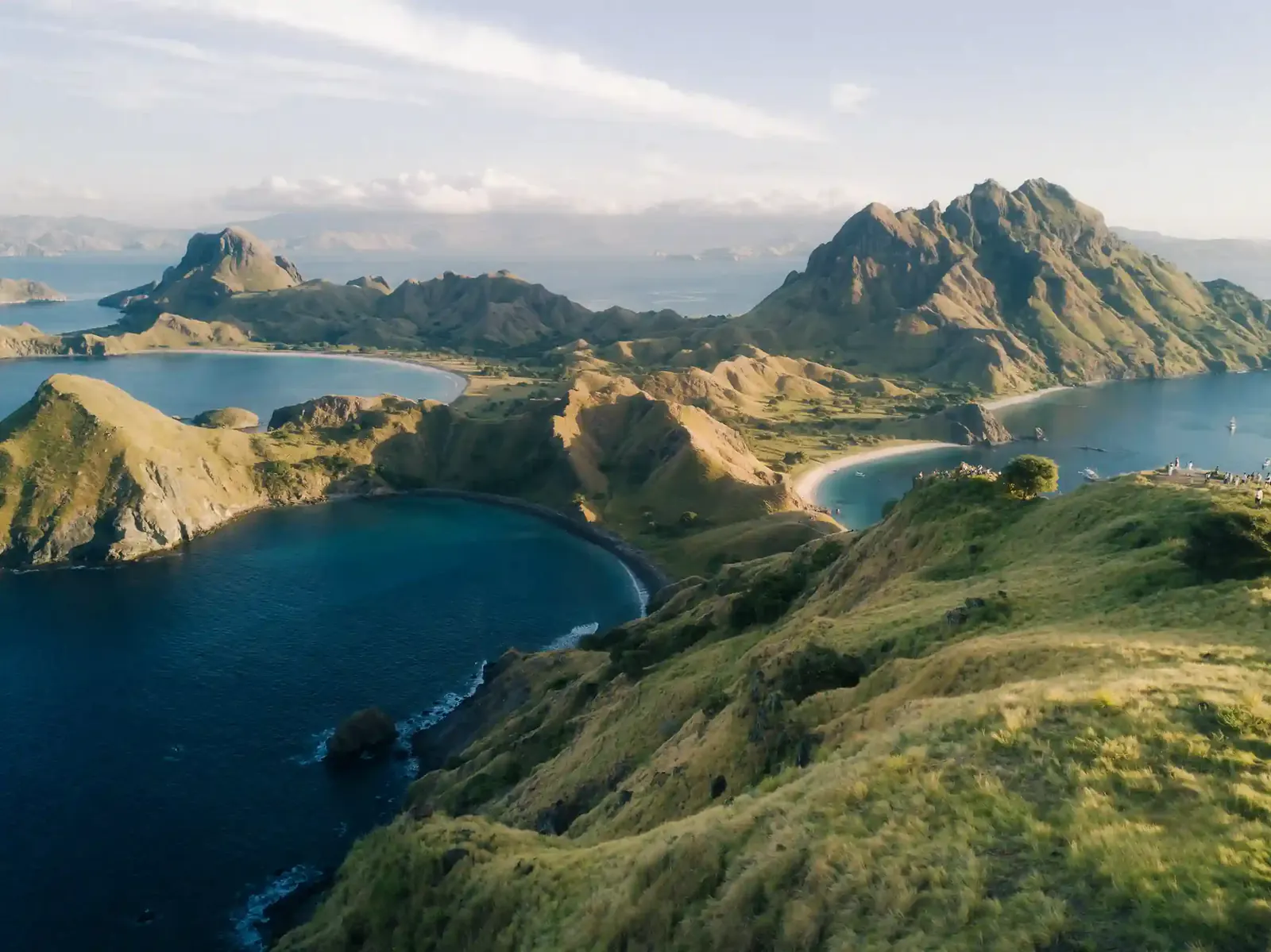
Komodo National Park has been named the 2nd Most Beautiful Place in the World by Time Out for 2026, an accolade that places this UNESCO World Heritage Site among the most celebrated landscapes on earth. The recognition honours its sculpted islands, rose-tinted shores, prehistoric dragons and manta-filled waters — and it has set demand for considered, well-arranged voyages rising sharply.
For an archipelago that sits barely an hour and a quarter by air from Bali, the distinction is a quiet vindication. Travellers who arrive in Bali knowing little of Komodo are discovering, often mid-trip, that one of the planet’s most beautiful places lies within easy reach. What follows is an editorial look at exactly what earned Komodo its place on that list, why interest is surging, and how to experience the park as it deserves to be experienced.
What earned Komodo the honour
Few destinations offer so many distinct wonders within a single protected seascape. Time Out’s recognition reflects a rare convergence of geology, wildlife and colour — each element extraordinary in isolation, and collectively without equal.
The Padar panorama
The view from the ridgeline of Padar Island has become the defining image of Komodo, and rightly so. From the summit, three curving bays fan out below — their crescent beaches each a subtly different shade — framed by volcanic spurs that fall steeply to the sea. At first light, with the heat still soft and the trails near-empty, the scene is among the most photographed and least forgettable in Indonesia. Our Padar Island guide sets out how the hike is timed and arranged for an unhurried sunrise.
Pink Beach and rose-coloured sands
Komodo is home to one of the world’s few genuinely pink beaches, where fragments of red coral blend with white sand to produce a soft blush along the waterline. Beneath the surface, the reef is vivid and densely populated, making it as compelling for snorkellers as it is for those content to walk the shore.
The dragons, in the wild
The Komodo dragon — the largest living lizard on earth — exists in the wild in only a handful of places, all within this park. To observe one in its natural habitat, accompanied by an experienced ranger, is to stand in the presence of a creature that has barely changed in millions of years. It is the encounter that gives the park its name and much of its mystique.
Manta rays and the underwater realm
The waters of Komodo are among the finest in the world for encountering manta rays, which glide through nutrient-rich channels in numbers that astonish first-time visitors. The diving and snorkelling here rank with the very best in Southeast Asia, completing a portrait of beauty that extends from ridgeline to reef. The full collection of islands and sites is mapped across our destinations hub.
Why demand is surging
Recognition of this magnitude does not pass unnoticed. Since the Time Out announcement, interest in Komodo has climbed steadily, and three forces are compounding it.
First, discovery. The great majority of foreign travellers arrive in Indonesia thinking only of Bali. The accolade is introducing Komodo to an audience that did not previously know how close, and how remarkable, it is.
Second, proximity. The practical ease of reaching the park surprises people. A direct flight from Denpasar to Labuan Bajo, the gateway town, takes roughly one hour and fifteen minutes, with several departures daily. A place this beautiful, this near to a destination travellers were already visiting, is an irresistible proposition.
Third, scarcity by design. From April 2026, Komodo National Park admits a maximum of 1,000 visitors per day, a conservation measure that protects the park while making advance planning essential. Heightened fame and a deliberate daily ceiling together mean the most sought-after dates are committing earlier each season.
How to experience it well
Beauty of this order deserves to be met with care rather than haste. A rushed visit — arriving without a settled plan, joining whatever sailing has space — risks reducing a once-in-a-lifetime landscape to a hurried checklist. The alternative is a voyage shaped around the park’s finest moments.
Experiencing Komodo well means a handful of considered choices:
- Time the light. The Padar viewpoint and Pink Beach are at their most magnificent in the early hours, before the day warms and other vessels arrive. A well-planned itinerary places you there first.
- Allow more than a single day. While day trips from Labuan Bajo exist, the park’s rhythm rewards those who linger — a private charter or a cabin aboard a phinisi turns a sightseeing run into an immersion.
- Secure your park permit in advance. With the daily quota now in force, your permitted entry should be held as the cornerstone of the trip, not left to the day itself.
- Travel with an operator who knows the park. Local knowledge — of tides, ranger schedules, the quietest landing windows — is what separates a beautiful trip from a flawless one.
This is where a dedicated operator earns its place. As part of the Juara Holding Group, with our own fleet and a concierge desk that answers around the clock, we arrange Komodo voyages as a single, seamless whole: flights, permits, vessel and the day-by-day choreography of where you stand and when. Begin with the wider picture on the Bali to Komodo homepage, and let the planning be ours.
Seeing the world’s second most beautiful place, properly arranged
Time Out’s honour confirms what those who have stood on the Padar saddle at dawn already knew: Komodo belongs among the most beautiful places anywhere. The accolade is an invitation — and, with the daily quota now shaping access, a gentle prompt to plan with foresight.
If you are weaving Komodo into a 2026 journey, the most graceful first step is to settle your dates and let us arrange the rest. Speak with a Komodo specialist on WhatsApp or write to [email protected], and the world’s second most beautiful place will be yours to experience, perfectly arranged.
Continue planning