
Komodo Visitor Quota 2026: The 1,000-a-Day Cap Explained
Komodo National Park caps entry at 1,000 visitors per day from April 2026. Understand the rule, why it exists, and how to secure your slot with a concierge.
April 24, 2026 · 5 min read
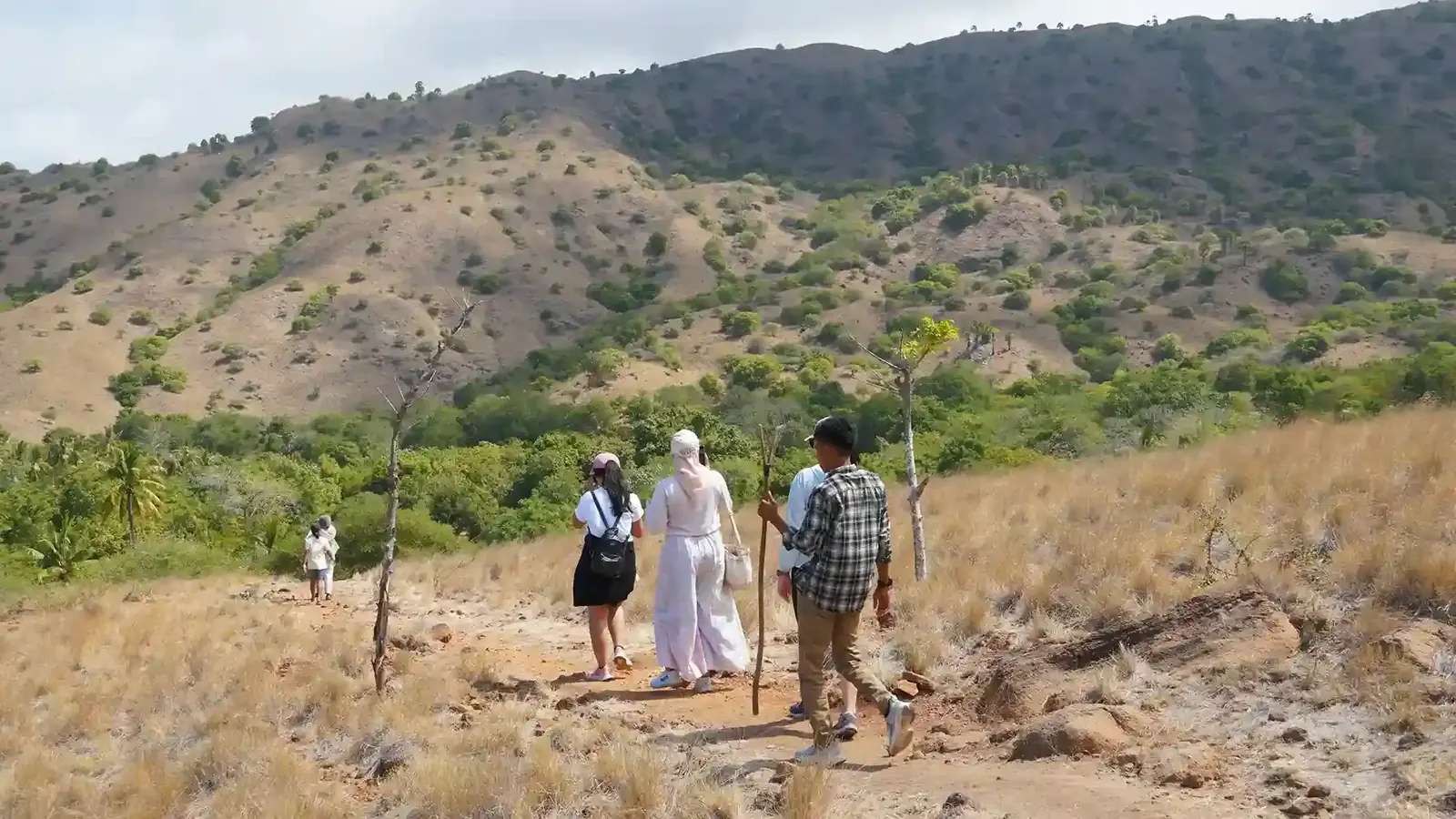
From April 2026, Komodo National Park admits a maximum of 1,000 visitors per day across its core islands. The cap is a conservation measure designed to protect the dragons, reefs and fragile trails of a UNESCO World Heritage Site. For travellers, it means a permitted slot must now be secured in advance rather than arranged on arrival.
This single change reframes how a Komodo voyage is planned. For years, visitors could reach Labuan Bajo and decide their boat itinerary almost on the day. The new daily ceiling rewards those who plan early and quietly penalises those who leave it to chance. Below is a measured account of what the quota is, why it exists, and precisely how we arrange permits so that your arrival inside the park is never in doubt.
What the 1,000-visitor quota actually is
The quota is a daily admission limit applied to the protected islands of Komodo National Park. Once the day’s allocation of permits is committed, no further entries are granted for that date. It is not a seasonal closure and not a lottery; it is a straightforward ceiling on how many people may set foot on the core islands in any twenty-four-hour period.
Three points are worth understanding clearly:
- It is a daily figure, not an annual one. Each calendar day carries its own allocation, which resets the following morning.
- It governs entry to the park’s islands, the trails where dragons roam and the landing points at sites such as Padar and Pink Beach — not the open waters around them.
- A valid permit is the mechanism of entry. Without one tied to your date, a vessel cannot land you on the protected islands.
For a fuller breakdown of the conservation levy, ranger fees and the permit structure, our dedicated Komodo entry fee and quota guide sets out every charge in detail, kept current for 2026.
Why the cap was introduced
Komodo National Park is one of the last places on earth where the Komodo dragon lives wild, and in 2026 it was named the #2 Most Beautiful Place in the World by Time Out. That recognition, deserved as it is, has consequences. Surging visitor numbers place real pressure on narrow ridgeline trails, on the dragons’ undisturbed habitat, and on the coral and pink sands that draw travellers in the first place.
The daily quota answers that pressure with restraint rather than restriction. By holding numbers to a sustainable level, the park authority protects the very qualities that make Komodo extraordinary: solitude on the Padar saddle at first light, an unhurried hour on a deserted Pink Beach, a respectful distance kept between guests and dragons. Conservation and a refined guest experience, in this instance, point in exactly the same direction.
How the quota affects your planning
The practical effect is a shift in timing and sequence. Where a Komodo trip once tolerated late decisions, the 2026 cap rewards a settled plan made well ahead of travel. We advise the following posture:
- Fix your dates early. Because the ceiling is daily, the most sought-after dates — long weekends, the dry-season peak, and holiday windows — commit fastest. Settling your travel dates is now the first decision, not the last.
- Build the itinerary around the permitted day. Your flight from Bali, your vessel and your landing schedule should all be arranged in concert so that your permitted entry sits cleanly within the trip.
- Treat the permit as the cornerstone. A boat without a valid park permit for your date cannot deliver the experience you came for. The permit, not the seat, is what guarantees you stand among the islands.
The flight itself remains the easy part: Denpasar (Bali) to Labuan Bajo, the gateway to Komodo, is roughly a one-hour-fifteen-minute direct flight, with several departures each day. There is no direct passenger ferry from Bali to Komodo; the practical route is to fly, and only a multi-day private sail covers the roughly 400 kilometres by sea. The discipline now lies in pairing that simple hop with a secured slot inside the park.
How we secure your slot
As an established operator within the Juara Holding Group, with our own fleet and a concierge desk that answers around the clock, we treat permits as a managed certainty rather than a hopeful afterthought. When you place your dates with us, we:
- Reserve the park permit against your confirmed date as part of the booking, so your entry is held before the day’s allocation tightens.
- Coordinate flights, vessel and landings as a single itinerary, removing the risk of a permit that does not align with your boat or your arrival.
- Monitor demand on your chosen dates and advise candidly if an alternative day would secure a calmer, less-pressured visit.
- Keep you informed throughout via a 24/7 concierge, so any change in park requirements reaches you long before it could affect your plans.
This is the difference between an aggregator and an operator. A ticket marketplace can sell you a seat; it cannot hold a conservation permit, sequence your landings, or reassure you at midnight that everything is in order. We can, and we do. Explore how a complete journey is arranged on our booking page, or begin with the broader picture on the Bali to Komodo homepage.
Securing 2026 dates with confidence
The 1,000-a-day quota is, on reflection, good news for the discerning traveller. It guarantees that Komodo will not be overrun, that the dragons will keep their wild dominion, and that those who plan with care will find the park as quietly magnificent as it deserves to be. The only requirement is foresight — and that is precisely what a concierge exists to provide.
If you are shaping a 2026 voyage, the wise first step is to settle your dates and let us hold the permit around them. Speak with a Komodo specialist on WhatsApp or write to us at [email protected], and your place inside the park will be arranged with the assurance that only a dedicated operator can offer.
Continue planning