
Pink Beach Komodo Guide: Why It’s Pink, Snorkelling & How to Visit (2026)
A complete Pink Beach Komodo guide: why the sand is pink, the reef snorkelling, the best time to visit and how to reach this rare rose-coloured shore.
May 2, 2026 · 6 min read
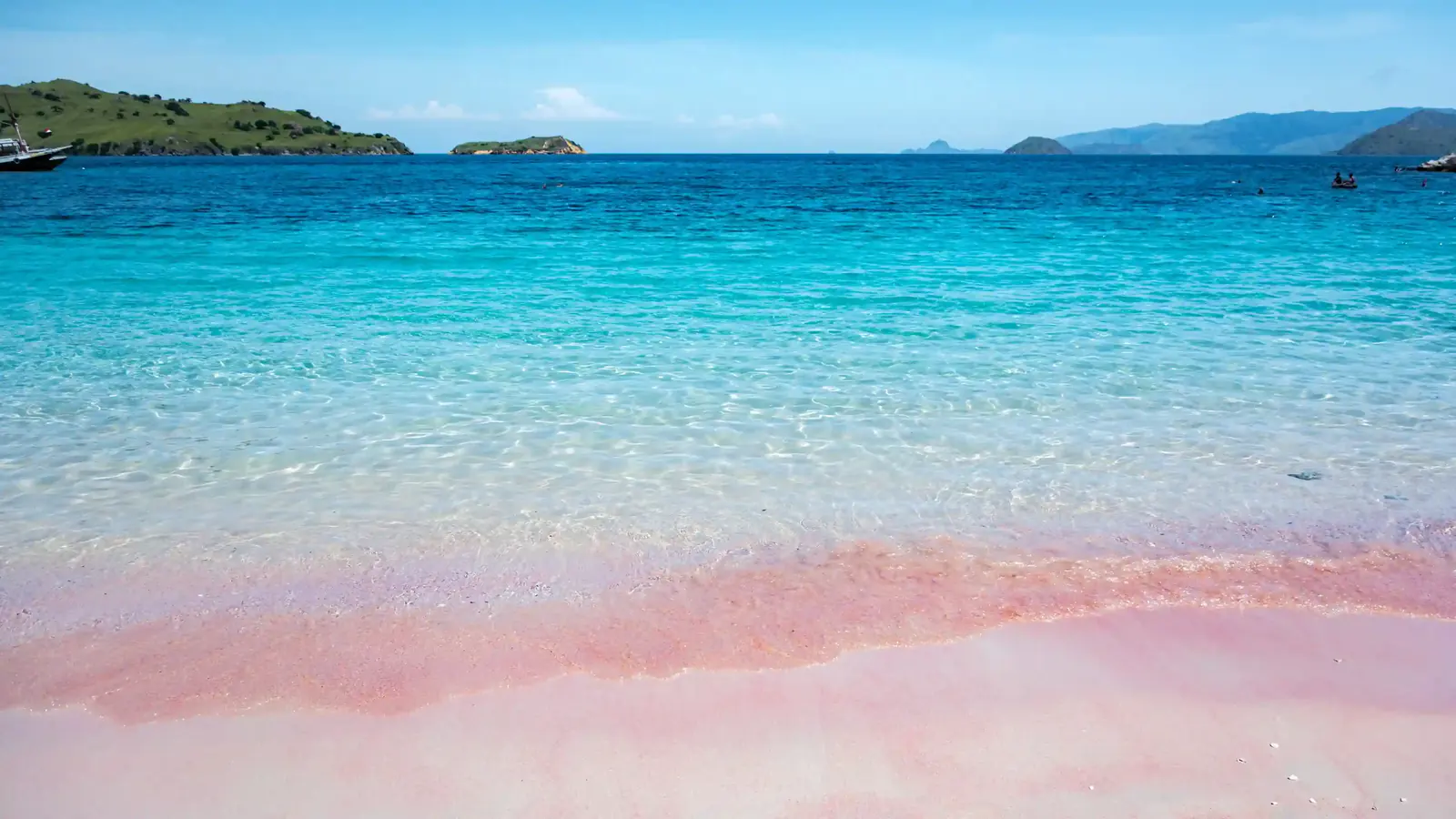
Pink Beach Komodo, known locally as Pantai Merah, is one of only a handful of pink-sand beaches on Earth. The blush colour comes from red coral fragments and the shells of tiny marine organisms mixed into white sand, and the shore is reached only by boat from Labuan Bajo. It is prized for easy reef snorkelling and soft golden-hour light.
Few sights in Komodo National Park feel quite as quietly magical as the moment the sand turns pink beneath your feet. Set against turquoise water and dry, golden hills, the colour shifts through the day — soft rose in flat light, deep coral when the sun is low. This complete guide explains exactly why the sand is pink, what makes the snorkelling so rewarding, when to visit, and the most graceful way to reach this remote and protected shore. We are Bali to Komodo, an Indonesian operator with our own fleet and crews who anchor off this beach week after week, so what follows is the shore as we know it. Every detail of the site is also set out in our Pink Beach destination guide.
Why the Sand at Pink Beach Is Pink
The colour is entirely natural, and the science behind it is elegantly simple. The reefs surrounding Komodo are home to a microscopic organism called Foraminifera, which produces a vivid red and pink pigment in its shell. As these tiny shells, along with fragments of red coral, are broken down by the sea over centuries, the resulting particles wash ashore and blend with the beach’s white sand. The mixture of red coral pieces and pale grains creates the distinctive rosy hue.
The effect is most pronounced where the waves deposit the freshest material, so the colour is often strongest right at the waterline and intensifies when the sand is wet. Move a few steps inland and the tone softens; stand where the surf meets the shore and it glows. This is worth knowing before you arrive, because travellers sometimes expect a vivid, uniform candy-pink and are surprised by something subtler — a soft rose that reveals itself most fully at the wet edge of the sea. The intensity also shifts with the tide, the season and the light, so no two visits look exactly alike. The phenomenon is exceptionally rare; only a small number of beaches worldwide share this composition, which is precisely why Pink Beach has become a destination in its own right rather than simply a stop along the way.
Snorkelling at Pink Beach
Pink Beach is as celebrated below the surface as above it. The reef begins close to shore and drops away into a vivid underwater garden, making it one of the most rewarding easy snorkelling sites in the park. Slip into the warm, clear water and you are met by hard and soft corals in remarkable condition, alive with colour. The shallows teem with reef fish — parrotfish, angelfish, butterflyfish and countless smaller species — while turtles graze the seabed and reef sharks patrol the deeper edges. Visibility is frequently excellent, and because the reef is accessible directly from the beach, it suits confident swimmers and casual snorkellers alike.
A few practical notes make the experience better. Bring or request a mask, snorkel and fins, and use reef-safe sunscreen to protect the delicate coral. Stay aware of currents, which can strengthen further from shore, and never stand on or touch the reef. For travellers who want more underwater drama, the wider park holds world-class sites, including the famous Manta Point, where giant manta rays glide through the channels. Many itineraries pair Pink Beach with these in a single day at sea.
Photographing Pink Beach
Pink Beach is one of the most photogenic places in Indonesia, and a little timing transforms a good photograph into a memorable one. The colour reads most clearly in soft, warm light: early morning and the late-afternoon golden hour render the pink at its richest, while harsh midday sun washes the tone toward pale white. Overcast moments can be surprisingly flattering, deepening the rose against the grey-green hills.
Compose to include contrast. The pink sand sings against the turquoise shallows and the arid backdrop, so a frame that captures all three layers — shore, sea and hills — conveys the colour far better than sand alone. A wet-sand foreground at the waterline gives the strongest hue. For the classic elevated shot, a short climb up the small hill behind the beach reveals the curve of the bay and the colour gradient from above. A polarising filter helps cut glare and saturate both the water and the sand.
The Best Time to Visit Pink Beach
The best time to visit Pink Beach falls within the dry season, from April to December, when seas are calm, skies are clear and snorkelling visibility is at its finest. The wet season, January to March, brings rougher water and less reliable conditions, though the park remains beautiful year-round. Within the dry months there is variation worth knowing: April and May bring fresh, green hillsides after the rains; June to September are reliably sunny and a touch busier; October and November often deliver the warmest, calmest water of the year, ideal for lingering snorkelling.
Timing your arrival within the day matters as much as the season. Boats from Labuan Bajo tend to converge on the beach in the middle of the day, so an early or later visit offers softer light, fewer fellow travellers and a more serene shore. A private charter or a multi-day cruise gives you the flexibility to arrive ahead of the crowds. It is also worth noting that a daily visitor quota of 1,000 people across Komodo National Park took effect from April 2026, and conservation fees apply on entry — planning ahead secures the best slots and the calmest hours on the sand.
How to Visit Pink Beach
Pink Beach sits on the coast of Komodo Island, within the national park, and is reached only by boat. Every visit begins in Labuan Bajo, the harbour town on western Flores that serves as the gateway to the park. Travellers coming from Bali typically fly to Labuan Bajo first — a direct flight from Denpasar of around one hour and fifteen minutes — before joining a boat.
From the harbour there are two main ways to reach the shore. A speedboat day tour usually combines Pink Beach with a dragon trek and a hike on Padar Island, returning the same evening, and places you on the beach in the busier middle of the day. Alternatively, a liveaboard or private yacht charter lets you anchor nearby, swim before the day-boats arrive and explore the park at a gentler pace — the finer way to see the shore, in our view. Browse the vessels in our cruise collection, or choose a multi-day trip package that folds Pink Beach into a complete Bali-and-Komodo journey.
To arrange your visit — with permits, timing and the right vessel all handled for you — speak with a Komodo specialist on WhatsApp at +62 811 3941 4563 or email [email protected]. Our concierge monitors sea conditions so your visit lands on a day when the water is clear and the light is kind. You may also begin from the homepage for an overview of every way to reach the park.
Continue planning