
Seeing Manta Rays in Komodo: When, Where and How
When and how to see manta rays at Manta Point, Komodo. Seasons, snorkel versus dive, etiquette and what the encounter is truly like. A 2026 concierge guide.
May 4, 2026 · 5 min read
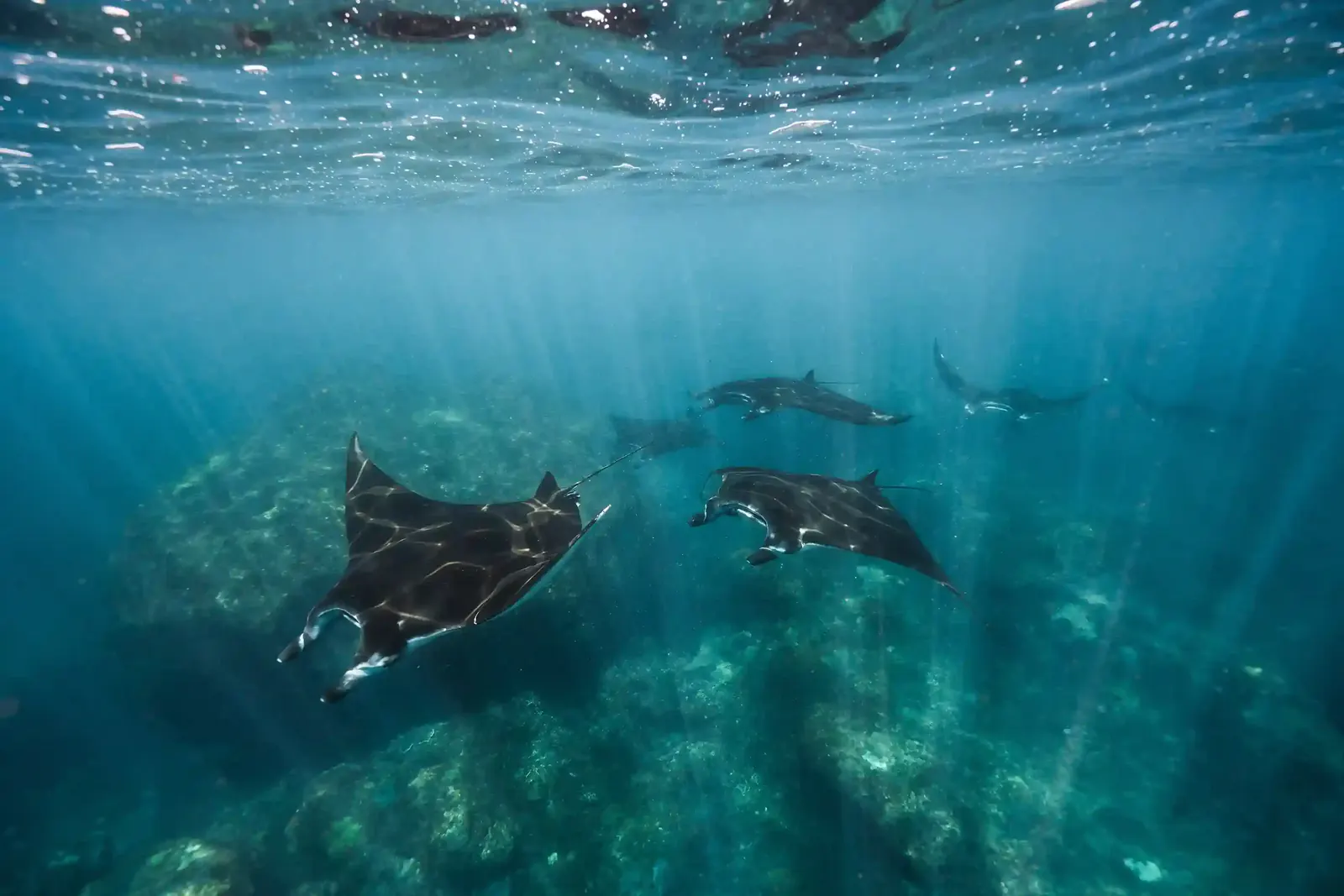
Manta rays are seen at Komodo’s Manta Point all year, with sighting rates of 80 to 90 percent and rising above 95 percent at the December to February peak, when plankton blooms draw the largest gatherings. The shallow cleaning station suits both snorkellers and divers, so almost any visitor, regardless of certification, can share the water with these gentle giants.
Few wildlife encounters in Indonesia rival the moment a reef manta glides beneath you, a five-metre wingspan unfurling in slow, deliberate arcs. They are filter feeders, entirely harmless, and at Komodo they congregate in numbers that reward patience and good timing. What follows is a clear briefing on when to come, how to enter the water, and how to behave so the experience is everything it promises to be.
Why Manta Point exists
Manta Point sits in a tidal channel where opposing currents push cold, plankton-dense water toward the surface. This upwelling is the entire reason the mantas are here. As filter feeders, they swim with mouths agape, sieving zooplankton from the water, and the channel delivers it in reliable abundance. The site itself is a shallow rubble plateau with cleaning stations at five to twelve metres, where smaller fish remove parasites from the rays in a quiet, choreographed exchange that the mantas return to again and again.
This combination of feeding ground and cleaning station is what makes the encounter so dependable. The mantas are not passing through; they have reason to linger. On a calm day with the rays feeding near the surface, you can watch the whole scene from above without ever leaving the shallows. Our Manta Point destination guide sets out the dive profiles, the current conditions to expect, and how the site fits into a wider Komodo itinerary.
The best season for mantas
Manta rays appear at Manta Point throughout the year, which is why it features on nearly every Komodo cruise regardless of the month. That said, the season shapes the spectacle. The peak runs from December through February, when plankton blooms in cooler, nutrient-rich water draw the largest aggregations; encounters with ten to twenty individuals at once are common in these months, and sighting rates climb above 95 percent.
The broader high-density window stretches from roughly October to June, with consistently strong numbers from November to March. Outside the peak you will still very likely see mantas, simply in smaller groups. There is a useful trade-off to weigh: the dry season from April to December brings calmer seas and clearer skies, ideal sailing weather, while the plankton that concentrates the mantas in December to February can slightly reduce underwater visibility. Neither rules out the other. The right balance depends on whether you are optimising for sheer numbers of rays or for the smoothest conditions on deck, and a concierge can help you choose.
Snorkel or dive: which suits you
The great virtue of Manta Point is that it welcomes everyone. The cleaning stations sit shallow enough that snorkellers, with no certification at all, regularly enjoy long, close encounters when surface conditions are calm and the mantas feed high in the water column. Snorkelling here is approved as part of guided day visits whenever the guide judges the conditions safe, which makes it the most accessible way to meet the rays.
Divers gain a different vantage. Descending to the cleaning stations lets you settle on the rubble at a respectful distance and watch the mantas circle overhead in unhurried passes, often for far longer than a surface swim allows. The channel can carry strong currents, so dives here are best suited to those with some experience and are always led by a guide who reads the tide. Whichever you choose, the encounter is led and supervised; no one enters the water unaccompanied. A multi-day cruise gives you the flexibility to attempt the site more than once, returning on the calmest tide, and our cruise collection explains how Manta Point is woven into liveaboard and private charter routes.
Etiquette in the water
Mantas are curious and tolerant, but the encounter depends entirely on our restraint. The rules protect both the animals and the quality of your experience:
- Never touch a manta. Their skin carries a protective mucous layer that human contact damages, and touching is strictly prohibited.
- Do not chase or block their path. Stay still or move slowly to the side; let the rays come to you, which they often will if undisturbed.
- Keep below or beside them, never directly above. Crowding the surface above a feeding manta can drive it away.
- Maintain a respectful distance of at least three metres. A calm, patient presence yields the longest encounters.
- No flash photography. It startles the rays and ends the moment for everyone.
- Follow your guide’s positioning. They know the currents and the mantas’ habits and will place the group where the experience is best and the impact least.
Observe these, and the mantas frequently reward the courtesy, looping back for repeated passes that can stretch a brief sighting into a long, mesmerising encounter.
What the encounter is truly like
Nothing quite prepares you for the scale and grace of it. A reef manta moves with a slow, banking flight, more bird than fish, and at Manta Point they often arrive in formation, gliding through the channel one after another. When several feed together near the surface, they perform looping somersaults to maximise their intake, a behaviour called barrel-rolling that is among the most beautiful sights in the ocean. From above, snorkellers watch the choreography unfold in clear shallows; below, divers feel the gentle pressure of water displaced as a wingtip sweeps past.
It is, by every account, a quiet privilege rather than a thrill ride. There is no danger, only awe, and the lasting impression is of an animal entirely at ease, going about its day while you are granted a window into it.
Arranging your manta encounter
Timing the tide, choosing the calmest day, and pairing the visit with the right vessel are exactly the details that turn a hopeful outing into a near-certain encounter. We arrange Manta Point as part of tailored Komodo voyages, selecting departures that align with the season and the conditions you value most.
Begin planning at our homepage, or speak directly with a Komodo specialist who can match the timing to your dates. Our concierge is available around the clock on WhatsApp or by email at [email protected], and will tailor the route, the vessel, and the season around the encounter you have in mind.
Continue planning